
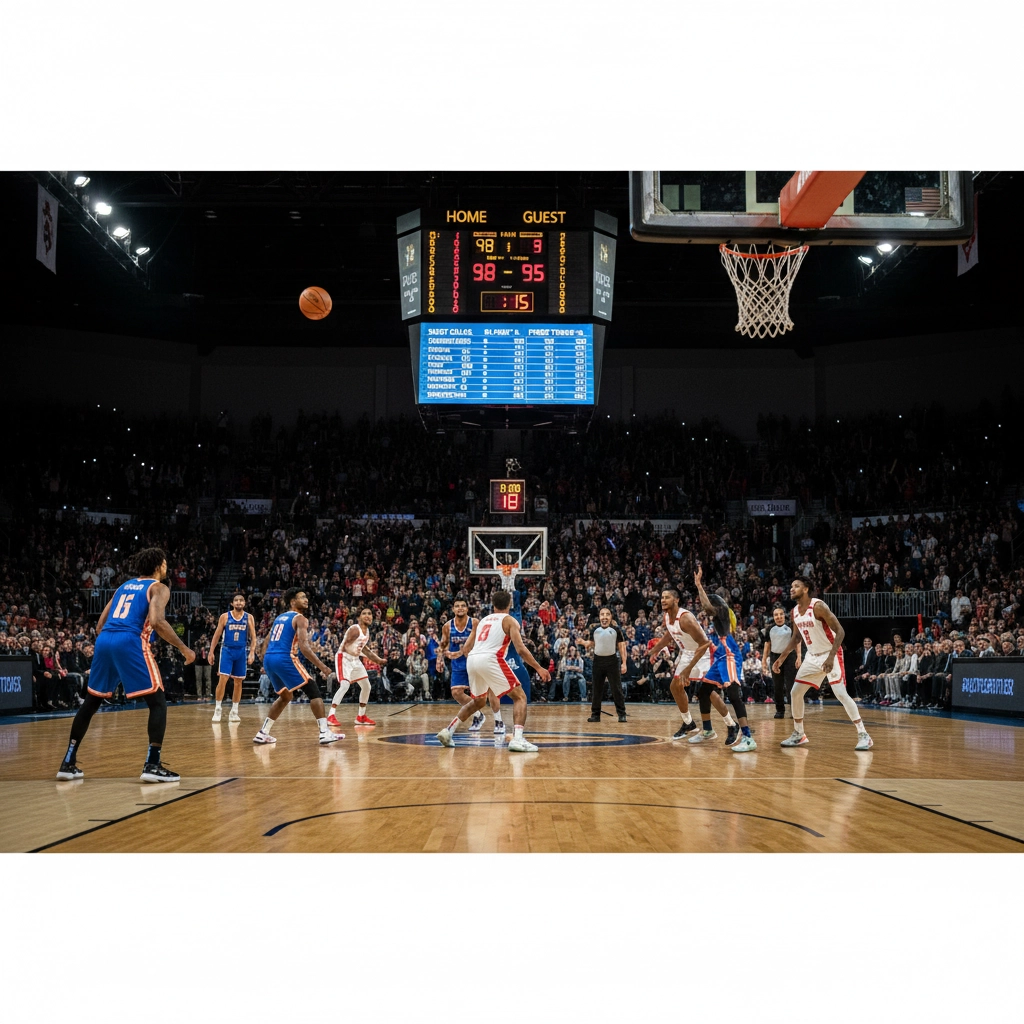
Why some basketball games become scoring fests while others stay low-scoring
You may have watched two NBA or college games back-to-back and wondered why one ended with a combined 240 points while the next barely cleared 140. The total points scored in a basketball match aren’t random; they result from a mix of structural, tactical, and situational factors that interact on the court. Understanding these factors helps you read the game better, make smarter predictions, and appreciate coaching choices and player roles.
At a high level, scoring totals are driven by how many scoring opportunities teams create and how efficiently they convert those opportunities. But both of those elements are shaped by deliberate decisions — pace of play, shot selection, defensive intent, and how the clock and foul rules are applied in a particular competition. In the sections that follow you’ll explore the main game-level influences so you can see how simple choices lead to big swings in point totals.
Game-level factors that directly change the total number of points
Pace: possessions are the currency of scoring
Pace measures how many possessions each team has in a game. The more possessions, the more chances to score. When teams push the ball in transition, hunt early shots, or intentionally shorten the shot clock, you should expect higher point totals. Conversely, teams that deliberately slow the game — using long possessions and patience on offense — reduce the number of scoring opportunities and often produce lower-scoring affairs.
Shooting efficiency and shot selection
Not all possessions are equal. Teams that take a higher share of open, high-value shots (like corner threes or rim attempts) will convert at a higher rate. If both teams are hitting their shots efficiently, total points rise quickly. Poor shot selection, heavy contested mid-range attempts, or cold shooting nights suppress scoring despite normal possession counts.
Defensive strategy, intensity, and matchup choices
Defense shapes both pace and efficiency. Aggressive on-ball pressure, shot contests, and help defense can reduce shooting percentages and force turnovers that limit scoring. Alternatively, fouling tactics or passive zone defenses might concede more shots but also send opponents to the line, which can either lower or inflate point totals depending on free-throw accuracy.
Fouls, free throws, and game control
Foul frequency and officiating style matter. A whistle-heavy game creates more stoppages and free-throw attempts, which increases the raw number of scoring events even if field-goal attempts decline. Late-game intentional fouling, bonus situations, and how coaches manage foul trouble also change point distributions across periods.
- Overtime adds standard-length scoring bursts and naturally increases totals.
- Timeouts and replay stoppages can cool momentum and affect flow.
- Rule differences (e.g., shot-clock length, three-point distance) alter scoring profiles across leagues.
These game-level drivers set the stage for the scoring pattern you observe. Next, you’ll examine player-level variables and tactical choices — such as individual shooting roles, lineup compositions, and coaching adjustments — that refine how those factors translate into actual points.
Player roles, shot creators, and how usage shapes scoring
Individual responsibilities and the way a team distributes the ball strongly influence both where and how often points are generated. A high-usage scorer (the primary ball-handler or isolation specialist) concentrates attempts and can inflate a team’s point total when efficient, but if that player is cold or guarded well, the offense can stall. Conversely, teams built around multiple creators — point guards who penetrate, wings who operate off screens, and bigs who roll to the rim — produce more balanced shot distributions that are harder to bottleneck and often lead to higher combined scores.
“Gravity” — the attention a shooter commands — also matters. A legitimate threat from deep stretches the defense, opening driving lanes and more efficient two-point looks. Role players who excel as catch-and-shoot threats or corner specialists raise team efficiency without needing high individual usage. On the flip side, lineups leaning on isolation scoring or contested mid-range shots reduce conversion rates and depress totals even when possession counts remain steady.
Turnover-prone players reduce total scoring simply by removing possessions. Likewise, foul-happy creatives who get into the bonus early change scoring composition toward free throws, which can either elevate totals (if free-throw shooters convert) or suppress them (if opponents’ fouls slow the pace). Hot-hand streaks, confidence swings, and matchup-specific advantages (a slow center versus a pick-and-roll team, for example) further tilt expected outputs toward higher or lower scoring nights.
Lineup construction, spacing, and the bench’s role in scoring rhythm
Which five are on the floor at any given time determines spacing, rebounding balance, and defensive capability — and thus the rate and efficiency of scoring. Small-ball lineups with shooters around a playmaker generally boost pace and three-point volume; they can create rapid scoring sequences but may concede offensive rebounds and second-chance points. Traditional big lineups may reduce perimeter attempts but earn more paint points and board-generated opportunities.
Bench production stabilizes scoring across the game. A deep rotation that sustains offensive flow when starters rest maintains possession quality and tempo; shallow teams often see marked scoring drops when the starters sit. Coaches who stagger substitutions to keep a scorer or a creator on the court can preserve output; those who lose matchups during key stretches often see scoring dry up. Matchup-driven lineup changes — inserting a switchable defender to slow an opponent’s star, or countering with a stretch big — can alter the balance of shots and thereby swing totals.
In-game foul trouble and tactical substitutions also reshape scoring distribution. When primary scorers are limited by fouls, the offense must reallocate attempts to secondary options, which can lower efficiency and points unless the bench steps up.
Contextual and situational variables: fatigue, stakes, and momentum
Physical and scheduling factors play a quiet but potent role. Back-to-back games, long travel, and accumulated minutes reduce shooting accuracy and defensive intensity, often producing sloppy possessions and fewer sustained offensive bursts. Injuries that remove a key creator or rim protector change strategic choices and typically lower scoring cohesion.
Game context — regular season versus playoffs, blowout versus close contest — affects urgency and shot selection. Playoff basketball, with increased scouting and defensive focus, tends to be lower-scoring than the regular season. Early-game momentum swings, crowd influence (home teams often get a scoring lift), and halftime coaching adjustments can all change how teams prioritize pace, risk, and shot profile in the second half, altering final point totals in ways that aren’t obvious at tip-off.
Advances in tracking technology and analytics have made it easier than ever to quantify the factors described above. Player-tracking data, lineup-based offensive ratings, and possession-level metrics let coaches and analysts isolate the drivers of scoring in ways not possible a decade ago. That means teams can test small changes — tweak spacing, adjust substitution patterns, or reassign defensive matchups — and measure real effects on points per possession. For fans and bettors, these tools clarify when a high projected total is driven by sustainable factors (efficient creation, stable lineups) versus transient ones (hot streaks, matchup quirks).
Putting these insights to use
Whether you’re a coach, player, analyst, or informed fan, the value lies in recognizing which variables you can control and which you must adapt to. Focus on intervention points: improve ball movement to reduce isolation, construct lineups that balance spacing and rebounding, manage workloads to avoid fatigue-driven slumps, and use matchup data to exploit opponent weaknesses. For deeper statistical reference and historical context, check resources like Basketball Reference to explore how these factors show up in box scores and advanced metrics.
Frequently Asked Questions
How does pace directly affect the total points in a game?
Pace determines the number of possessions each team has; more possessions generally mean more scoring opportunities. However, faster pace can lower efficiency per possession if teams take rushed or lower-quality shots. The net effect on total points depends on whether the increase in attempts offsets any drop in conversion rate.
Can bench performance really change the final score as much as starter play?
Yes. A productive bench maintains offensive rhythm when starters rest, sustains pace, and can exploit tired opponents. Conversely, a weak bench creates scoring droughts and can allow opponents to build runs, materially affecting final totals and game flow.
Why do playoff games often have fewer points than regular-season games?
Playoff defenses typically tighten with more detailed scouting and longer preparation, reducing open looks and three-point volume. Coaches shorten rotations, increasing the intensity and focus on defense by primary players, which usually suppresses overall scoring compared with the regular season.