

Why live basketball betting can be more profitable than pregame wagers
When you watch a game unfold, you gain information that the pregame market didn’t fully price. You see how teams handle pressure, how rotations change, and which players are in form. In live basketball betting, the bookmaker’s odds react to events with a lag — and that lag is an opportunity. If you learn to spot momentum swings, substitution patterns, and late-game matchups, you can place smaller, higher-confidence bets that compound into consistent profit.
Betting in-play also reduces the impact of surprises that often wreck pregame assumptions, such as last-minute injuries or unexpected coaching decisions. You can fade an early hot shooter or take advantage of lines that overreact to a single run. However, live markets move quickly and require discipline: you must be decisive, manage a separate live bankroll, and avoid emotional chasing when lines reverse.
How to read in-game odds and identify high-value opportunities
Understand the main live markets
- Moneyline: Simple to follow — bet which team will win the remainder of the game. Best for late-game situations when spreads are small.
- Spread: Covers point margin over the rest of the game. Watch for line compression after big scoring runs.
- Totals (over/under): Useful when pace changes or foul rates spike; track second-chance points and free throw frequency.
- Player props: Focus on minutes and usage — if a star gets into foul trouble, props move faster than lines.
Watch momentum, rotations, and fouls
Momentum is measurable in small ways: consecutive shot attempts, defensive stops, turnover frequency, and bench performance. When a bench unit outperforms expectations for multiple possessions, the implied line often lags — giving you an edge before the market adjusts. Similarly, early foul trouble for a key player should shift your outlook but not always the market price; identify if the team’s backup matchup is favorable and act fast.
Use line movement and market signals
Track how quickly the spread or total changes after timeouts, substitutions, or scoring runs. Heavy, immediate movement usually reflects sharp money; gradual drift can signal casual bettors’ responses. If a line moves without a clear on-court reason, investigate factors like late injury reports, betting limits, or hedge activity. You can exploit overreactions by sizing bets when value is clear and avoiding action when market efficiency is high.
Practical pre-match prep for live success
- Study team tempo, bench depth, and foul-prone players before tip-off.
- Set a live-specific bankroll and max stake per play to control variance.
- Choose one or two leagues to follow closely so you recognize patterns instantly.
With these fundamentals — knowing the markets, reading momentum, and preparing ahead — you’ll be positioned to capitalize on in-game odds. Next, you’ll get step-by-step live betting strategies and concrete examples that show how to size bets, time entries, and manage risk in real time.
Step-by-step live betting strategies to lock in value
Turn your observations into repeatable actions. Treat live betting like a trading desk: have rules for when to enter, when to scale, and when to walk away.
- Pre-identify 2–3 trigger events: Examples: a star player picking up two early fouls, the opponent’s bench outscoring starters for three straight possessions, or a sudden spike in offensive rebounds. When a trigger occurs, switch from passive watcher to active decision-maker.
- Use a clear sizing plan: Define a live-only bankroll (separate from pregame funds) — common practice is 5–15% of your full bankroll. Bet units should be a fixed percentage of that live bankroll (e.g., 1–3% per standard edge-sized play). For higher-confidence situations (late-game, small spreads, obvious mismatch) increase to 3–5% but cap single stakes to prevent ruin.
- Scale in and out: Rather than placing one large wager, split exposure into two or three tranches. Example: if you want $150 total exposure, place $75 when the opportunity first appears and reserve $75 to add if the odds shorten confirming momentum, or to hedge if things swing against you.
- Time entries to natural stoppages: Place bets right after made baskets, timeouts, or official injury reports. Lines adjust fastest at those moments — getting your ticket just before an expected move avoids immediate value evaporation.
- Predefine stop-loss and profit exit rules: For live parlays or multi-leg exposure, use stop-loss limits (e.g., don’t lose more than 10% of live bankroll in one game) and profit-taking rules (cash out a winning position once it returns +50–100% of the initial stake, depending on confidence).
Real-time examples: sizing, timing, and execution
Concrete scenarios sharpen decision-making. Below are practical plays with numbers you can adapt.
- Late-game moneyline (small spread): Score 5-point game with 3:10 left and the public-heavy favorite up by 2; market shows favorite -120 to close. If you judge clutch defense favors the underdog and value is -110 on the dog, a 3–4% live-bankroll bet is sensible because the remaining variance is low and the edge is time-dependent.
- Foul trouble hedge: Your pregame prop was player X to score 20+. He picks up his 3rd foul at 6:30 left. Instead of abandoning, place a smaller hedge on the under for player points (1–2% of live-bankroll) or reduce exposure by selling part of the position if your book offers cash-out — preserve capital while retaining upside if he returns.
- Momentum fade on totals: First quarter ends 10–9 after an unusually low-tempo start; the market overreacts and pushes the game total down. If pregame research showed both teams typically run second quarters at a higher pace, take the over in small, staged bets (two equal wagers spaced by a timeout) to benefit if pace returns.

Common live-betting traps and quick fixes
Being aware of frequent mistakes prevents small losses from becoming disaster.
- Trap — Chasing after emotional losses: Remedy: impose a loss cap per game/session (e.g., stop for the night after losing three live units).
- Trap — Ignoring referee and matchup context: Remedy: track foul calling tendencies early; if refs are whistle-happy, pivot to totals and free-throw-influenced props instead of spread plays.
- Trap — Slow execution and latency: Remedy: use a betting platform with low latency, pre-login to multiple books, and practice clicking speeds. When you must act, smaller, quicker bets beat delayed large wagers.
Practice, tools, and tracking
- Keep a live-betting log: record triggers, stakes, odds taken, and outcomes. Reviewing patterns is how small edges become consistent profits.
- Use multiple sportsbooks: compare odds to spot outliers and reduce latency risk by having backup accounts ready.
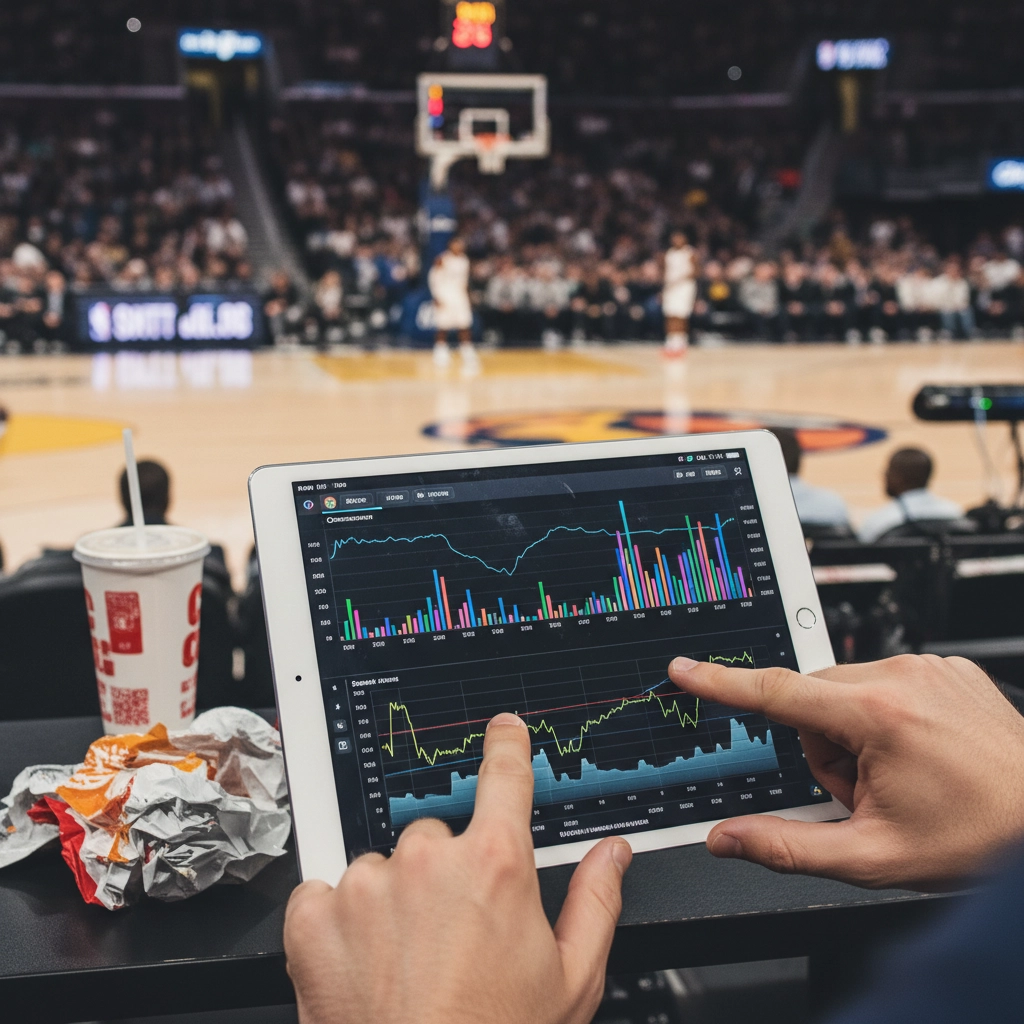
- Leverage live data feeds and on-court stats: pace, rebound rates, and foul frequency move faster than narratives — tools that surface these metrics give you a real advantage.
- Run simulated sessions: practice timing and bet sizing in low-cost or paper-money environments to build speed and discipline before increasing stakes.
Putting your live betting rules into action
Approach live betting like a skill to be honed: limit your plays, enforce strict sizing, and treat each decision as a trade with defined entry and exit rules. Stay curious about why lines move, patient with variance, and ruthless with rule-breaking (no chasing, no impulsive ramp-ups). Over time, disciplined practice and accurate tracking will reveal the situations where you consistently find value. When you’re ready to expand, scale slowly — protect the process, not the ego. For deeper statistical resources, consult Basketball-Reference.
Frequently Asked Questions
How much of my bankroll should I allocate to live betting?
Allocate a separate live-only bankroll to limit correlation and variance with your pregame wagers. A common guideline is 5–15% of your total bankroll as the live pool, with individual live bets sized at roughly 1–3% of that live pool for standard plays and up to 3–5% for high-confidence, late-game edges.
Which live market is best for beginners to focus on?
Beginners often start with late-game moneyline and small-spread plays because outcomes are less volatile with limited remaining possessions. Totals are also approachable when you can objectively assess pace and foul trends. Stick to one or two markets until you consistently identify value.
How can I minimize latency and execution issues during live betting?
Use sportsbooks with low-latency platforms, stay logged into multiple books, and pre-set bet sizes where possible. Practice fast, small-size clicks in low-stakes sessions to improve execution. If latency persists, reduce stake sizes or avoid markets that require split-second entries.