
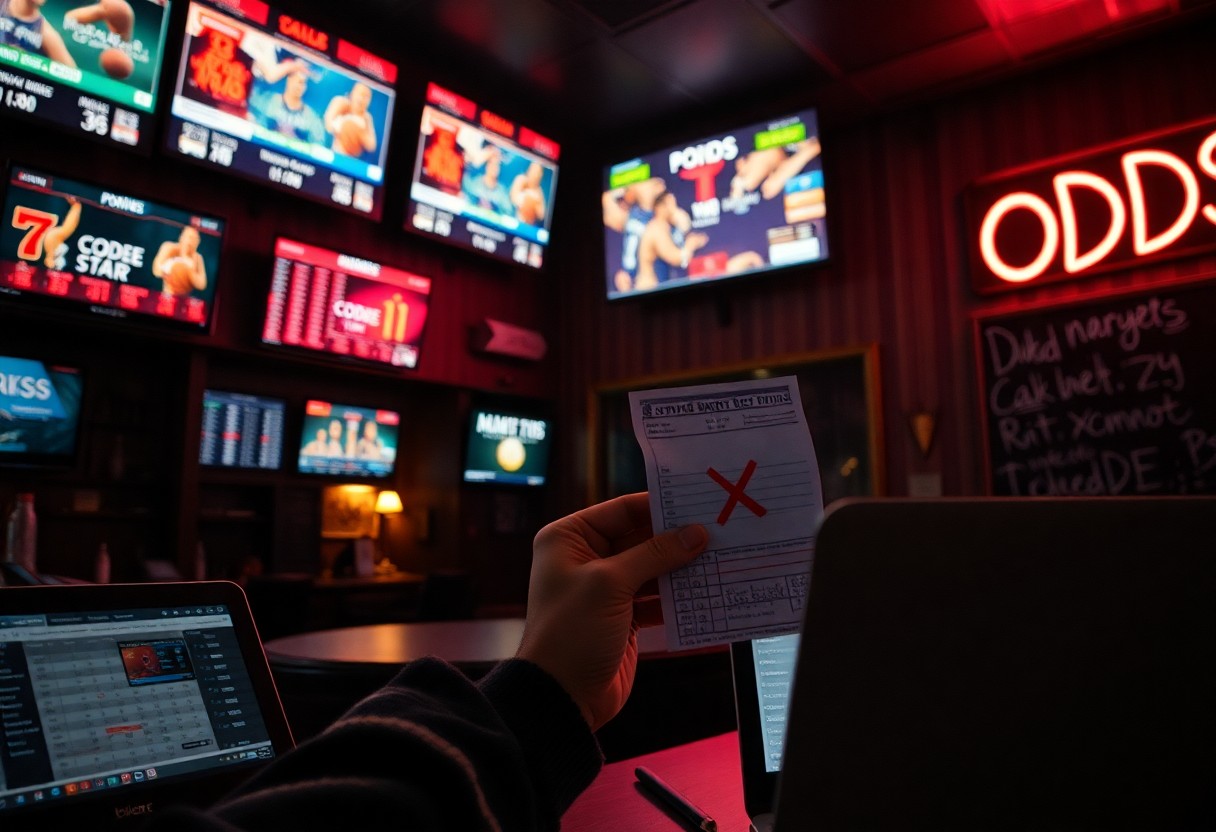
mistakes like overbetting, chasing losses, and ignoring matchup or pace data erode bankrolls. This guide exposes the most dangerous errors and prescribes clear fixes: disciplined stake management, consistent line shopping, objective selection criteria and strict record-keeping to protect capital and improve long-term edge.
Understanding Types of Bets
| Point Spread | Handicap to level favorites (e.g., -7.5); most bets at -110 juice. |
| Total (Over/Under) | Predict combined score (example line: 215.5); pace and efficiency drive value. |
| Moneyline | Straight win/loss with odds like -150 or +130; implied probability matters. |
| Player Props | Bets on individual stats (points, rebounds); missing players change lines dramatically. |
| Parlays & Futures | Combine legs for bigger payouts; variance and bookmaker vig increase risk. |
- Point Spread
- Total (Over/Under)
- Moneyline
- Player Props
- Parlays
The best practical approach is to match the bet type to your edge-use spreads for pace mismatches, totals when your models forecast combined scores above/below the posted line, and moneylines when odds offer implied probabilities below your win-rate estimate.
Point Spread Bets
Favorites cover when they beat the spread; a -7.5 favorite must win by 8. Market lines often sit at -110, so losses stack quickly if you ignore rest, travel and injury swings-home-court often worth ~2-3 points. Bet spreads when your model shows a difference of at least 3-4 points from the line to overcome juice.
Total (Over/Under) Bets
Totals hinge on pace (possessions) and efficiency; a 215.5 line becomes exploitable if team tempos differ by 6-8 possessions or key shooters are out. Public often leans Over early in season, creating edge for contrarian models that track true possession estimates. Highlight pace and injury-driven minute changes for value.
Modeling totals means converting team possessions to expected points: use each team’s possessions/game and offensive/defensive ratings to estimate combined score. For example, a 2-point higher offensive rating across 100 possessions raises expected total ~2 points; a 5-possession tempo gap can alter expected total by 6-10 points, enough to flip value when the board is within a half-point.
Moneyline Bets
Moneylines are best for straight outcomes: -150 implies ~60% win probability, while +130 implies ~43.5%. Use them when your win-probability model exceeds the market-implied number by a meaningful margin. Beware heavy favorites with poor payout-value often lies in underdogs or short favorites where variance is lower than implied.
Exploit moneyline value by comparing model win rates to implied odds; for instance, a model projecting a 52% win chance against a market implying 45% (line around +120) yields positive EV. Also monitor late line moves for injury news-moneyline swings often reflect sharper books adjusting to new information rather than public bias.
Key Factors Influencing Basketball Betting
Several measurable elements move lines and totals: pace, net rating, home/away splits, rest, injury reports and historical matchups all change expected outcomes. Bookmakers and sharp bettors react to last-minute injury news and rest-based lineup shifts, and small pace differences (2-3 possessions) can shift totals by a few points. Assume that you should weight team performance metrics, player injuries and historical matchup data higher when sizing stakes and timing bets.
- Team Performance Metrics
- Player Injuries and Lineup Changes
- Historical Matchup Data
- Pace
- Home/Away Splits
- Rest & Fatigue
Team Performance Metrics
Offensive and defensive ratings, especially net rating, expose true team strength; a 5-point net gap often corresponds to a multi-point spread edge. Also track eFG%, turnover rate, and free-throw rate-teams with a 4-6% eFG advantage typically outperform lines. Use 30-game rolling averages and opponent-adjusted stats to reduce noise and spot sustainable trends for lines and totals.
Player Injuries and Lineup Changes
Star absences alter scoring, spacing and defensive assignments-losing a top usage player can swing spreads by several points and change totals via pace adjustments. Depth matters: a bench-only replacement that reduces offensive efficiency or increases opponent transition chances is a live edge for bettors. Monitor official reports within 24 hours of tip.
Run with-and-without analyses: compare the team’s net rating over the past 50-100 possessions with the player on court versus off, and flag drops >4 points as meaningful. Also inspect minutes redistribution-if a backup increases turnovers or opponent assist rates, expect higher totals; prioritize multi-game trends over isolated games to avoid small-sample bias.
Historical Matchup Data
Head-to-head results reveal stylistic advantages-if one team has held the other to 4-6 fewer points per 100 possessions across recent meetings, that pattern often persists until rosters or coaching change. Account for venue effects: road performance shifts can erase H2H edges, so weight recent meetings and playoff contests more heavily when relevant.
Separate H2H into same-roster versus different-roster samples and use opponent-adjusted metrics (RAPM or on/off splits) to control for context. For example, a team that historically won by limiting paint attempts may lose that advantage after trading a rim protector, making old H2H results misleading.
Tips for Smart Betting Strategies
Adopt a methodical plan: use bankroll management (commonly 1-2% units), target +EV bets, and record every stake to measure ROI over time; the NBA home team wins about 60% of regular-season games, so factor venue into edges. Compare lines across multiple books to capture small value gains that compound. Any disciplined routine combines bankroll limits, line shopping, and honest record-keeping.
- bankroll management
- line shopping
- value bets
- unit sizing
- record keeping
Setting a Budget
Separate a dedicated bankroll from living funds and fix a unit size at 1-2% of that bankroll (so $1,000 → $10-$20 units). Cap monthly drawdown to 5-10% and reduce units after a 20% negative swing; increase cautiously after sustained profit. Track bets to calculate win rate and long-term ROI, aiming for at least 100 wagers before drawing conclusions.
Shopping for the Best Odds
Compare lines across at least 3-5 sportsbooks, check the vig, and use odds-comparison tools; a 1-2 point advantage or better moneyline can meaningfully change long-term returns. Favor books that offer higher limits and faster line releases when you identify value.
Monitor early lines and sharp action: if an early spread opens -3 and moves to -5 after heavy sharp bets, the move indicates market information you might exploit elsewhere. Use alerts for injuries and lineup news-late scratches commonly shift spreads by a point or more-and be ready to act before public money inflates the price. Line movement analysis helps separate noise from sustainable edges.
Recognizing Betting Patterns
Audit your history to find harmful habits: chasing losses, over-betting favorites, or betting correlated props can mask a negative edge. Calculate metrics like average unit size, win rate, and yield; consistent negative yield after 200+ bets signals strategy failure rather than variance.
Create simple dashboards: plot unit-size distribution, track stake after wins/losses, and flag bets with high correlation (same-game parlays, shared player minutes). Backtest tweaks-reducing unit size on losing streaks or trimming public-heavy markets-and measure impact over 500+ historical bets to validate changes before applying live. Self-audit reveals systemic leaks.
Step-by-Step Guide to Placing Bets
Start by narrowing value opportunities, size stakes relative to a tracked bankroll, and always confirm the market before submitting. Use a checklist: compare odds across books, verify injury reports, and set a maximum stake of roughly 1-3% of bankroll per standard bet to protect long-term ROI.
| Step | Action |
|---|---|
| Research & Analysis | Scan last 10 games, pace, offensive/defensive ratings, home/away splits, and injury reports for edges. |
| Choose Sportsbook | Compare lines, vigorish (vig), betting limits, promos, and licensing before committing funds. |
| Finalize Bet | Confirm stake size, re-check line, set bet type, then submit and log the wager. |
Research and Analysis
Prioritize stats that move lines: analyze the last 10 games for pace and offensive/defensive rating swings, check injury reports within 24 hours, and weigh situational factors like back-to-back games or travel. For example, home teams win roughly ~60% of NBA games and teams off two nights tend to underperform by measurable margins; use those patterns to find lines where the market misprices true probabilities.
Choosing the Right Sportsbook
Shop lines across multiple platforms to capture the best price; a shift from -110 to -105 reduces the bookmaker edge by about 1.9%. Prioritize sportsbooks with low vig on standard markets, transparent payout times, and active liquidity for live markets-this can improve long-term returns and reduce slippage during in-play bets.
Dig deeper by using an odds aggregator to compare live lines in real time and track historical line movement; if Book A posts -110 and Book B posts -105 on the same market, size bets at Book B when other factors align. Also verify licensing (state or international regulator), withdrawal speeds (typical 24-72 hours for e-wallets), and maximum limits to avoid being limited when you win.
Finalizing Your Bet
Decide stake using a staking plan-flat stakes of 1-3% of bankroll or a fractional Kelly approach limits downside. Before submitting, re-check the market for last-minute injury updates, confirm the exact bet type (moneyline, spread, total), and ensure odds haven’t shifted; small price changes materially affect expected value on tight markets.
After placing the wager, immediately log the bet with details: sportsbook, stake, line, timestamp, and rationale. If betting in-play, account for latency-confirm the accepted odds on your ticket, since delayed interface updates can accept a worse price. Maintain a simple spreadsheet to track ROI by market and adjust strategy when long-run win rate deviates from expectations.
Pros and Cons of Different Betting Approaches
| Pros | Cons |
|---|---|
| Point spread: evens out skill gaps, good for ROI with model edge. | Sharp lines require deep data; small edges get erased by juice. |
| Moneyline: simple to interpret, useful for underdog value. | Favorites juice can kill ROI; large favorites offer poor value. |
| Totals (O/U): exploitable with pace and tempo metrics. | Line movement from weather/injuries can be rapid and misleading. |
| Live/In-play: opportunity to exploit momentum and late info. | Latency, rapid price changes and emotional decisions increase losses. |
| Parlays: high payout on small stake. | House edge compounds across legs; long-term EV is negative. |
| Prop bets: niche edges from deep research on player usage. | Market inefficiencies shrink quickly; stats variance is high. |
| Futures: big payouts possible by spotting undervalued longshots. | Money tied up long-term; lineup/coach changes increase risk. |
| Value betting: targets +EV opportunities for sustainable profit. | Requires accurate models; many perceived “value” bets are noise. |
| Chalk betting: lower variance, often predictable short-term. | Lower returns and frequent juice; consensus lines remove edge. |
| Betting systems: offer structure and staking plans. | Systems can’t change negative EV; can accelerate bankroll drain. |
Value Betting vs. Chalk Betting
Value betting seeks spots where your model assigns higher win probability than the market; a +EV edge of even 2-3% compounds quickly. Chalk betting follows favorites and public money, offering lower short-term variance but typically lower long-term ROI; for example, backing 1.30 favorites repeatedly delivers consistency but rarely beats the market margin after juice.
Betting Systems: Martingale and Fibonacci
Martingale doubles stakes after losses to recover, while Fibonacci increases stakes per sequence 1-1-2-3-5; both impose predictable growth on failures. Martingale can force a single large loss (e.g., $10→$20→$40→$80), causing rapid bankroll depletion, whereas Fibonacci is less aggressive but still vulnerable to long losing streaks.
Martingale mathematically needs only one win to recover but hits table limits and bankroll caps fast; a 7-loss streak on a $10 base stake requires $1,280 on the eighth bet. Fibonacci reduces peak exposure but extends recovery time and does not alter negative expected value; both are staking schemes, not EV creators, and should be treated as high-risk money-management tactics.
Emotional vs. Rational Betting
Emotional betting chases losses, stakes impulsively, and follows gut calls, which inflates variance and often converts small losses into large ones. Rational bettors track metrics, set unit sizes and stop-loss rules; a disciplined approach with fixed-unit bankroll management tends to preserve capital and reveal edges over hundreds of bets.
Tilt commonly causes stake inflation-doubling after losses or adding parlays-accelerating ruin probability. Practical examples: increasing stake from 1 to 3 units after three losses triples exposure; by contrast, a rational rule like max 2% bankroll per bet keeps maximum drawdown bounded. Use objective logs, ROI tracking, and predetermined limits to force rational decisions under pressure.
Common Mistakes Bettors Make
Frequent errors include overreacting to short streaks, relying on box-score noise instead of opponent-adjusted metrics, and chasing losses with bigger stakes. Small samples-like 5-10 games-produce swings of ±5-10% in shooting splits and game pace, so treating those as predictive leads to value loss. Focus on systematic edge identification rather than headline-driven impulses.
Overreacting to Recent Performance
When a player posts 30+ points over three games, bettors often inflate his true value; however, sample-size noise is high-10 games can mislead more than inform. Use rolling averages and opponent context: a 28-point night against a rested top-10 defense carries different weight than one versus a second-string unit. Treat short streaks as signals to investigate, not automatic reasons to increase stake.
Ignoring Stat Analysis
Many bettors still pick based on points per game or headline stats, missing metrics like pace-adjusted points per 100 possessions, eFG%, TS%, defensive rating, and matchup-driven usage. For example, a team averaging 110 PPG on a pace of 102 is not as potent as one scoring 105 PPG on 95 possessions; failing to convert to per-possession numbers hides value and risk.
Deeper analysis means adjusting for opponent strength, home/away splits, and sample windows: compare season-long ratings to last 10 games and weight them (e.g., 30/70 season-to-recent) while controlling for injuries and rest. Incorporate lineup-based on/off numbers and opponent matchup issues-if a team allows 1.12 PPP to high-usage guards, betting against them when facing a ball-dominant guard may be +EV.
Chasing Losses
After a losing run bettors escalate stakes hoping to recover, but this increases variance and ruins bankroll growth. Employ fixed-percentage staking (commonly 1-2% of bankroll) or fractional Kelly to protect capital. A gambler who doubles bets after two losses risks ruin; disciplined size control preserves long-term profitability and keeps emotional decisions out of play.
Psychology drives chasing: aversion to loss and the desire to “get even” prompt poor bets. Implement stop-loss rules (e.g., walk away after 3 straight losing days or a 5% bankroll drawdown) and log bets to review decision quality. Using pre-set stake tables tied to confidence levels prevents ad-hoc escalation and maintains edge across seasons.
To wrap up
Considering all points, bettors should avoid chasing losses, betting on emotion, ignoring injuries or scheduling, neglecting bankroll and unit sizing, failing to shop lines, and overlooking analytics; mitigate these mistakes by setting strict bankroll rules, researching situational factors and advanced stats, comparing odds across books, and maintaining disciplined staking to build a consistent edge.
FAQ
Q: What statistical mistakes do bettors make when betting on X in basketball (and how can they avoid them)?
A: Bettors often overreact to small samples and surface-level box-score numbers, treat raw averages as reliable indicators, and ignore context like pace, matchup, minutes, garbage time and recent role changes. To avoid these errors, use rate and per-possession metrics, set minimum sample-size thresholds before trusting trends, adjust for opponent defensive strengths and game pace, check play-by-play or usage changes after lineup shifts, and apply simple regression-to-the-mean checks in your model or decision process so isolated hot/cold streaks don’t dictate bets.
Q: How do bettors misread market lines and news when betting on X, and what should they do instead?
A: Common mistakes include failing to shop lines, misinterpreting market movement, acting on unverified or late information, and overlooking vig and market consensus. Avoid these by maintaining accounts at multiple books to capture the best price, tracking closing-line value as a long-term edge gauge, relying on vetted beat reporters for injury and rotation info, distinguishing genuine line movement driven by sharp money from public bias, and factoring juice into implied probabilities when calculating value.
Q: What behavioral and bankroll mistakes derail bettors on X, and which practical rules reduce those risks?
A: Frequent issues are poor bankroll management, chasing losses, oversized single bets or correlated parlays, emotional bias toward favorite teams or recency-driven picks, and inconsistent stake sizing. Mitigate these by using a staking plan (fixed-percentage units, e.g., 1-3% of bankroll), setting strict loss limits and cold-off periods, avoiding correlated combinations unless edge is clear, keeping a bet log to detect biases and ROI by market, and forcing predefined criteria for every wager so emotions don’t override your process.