
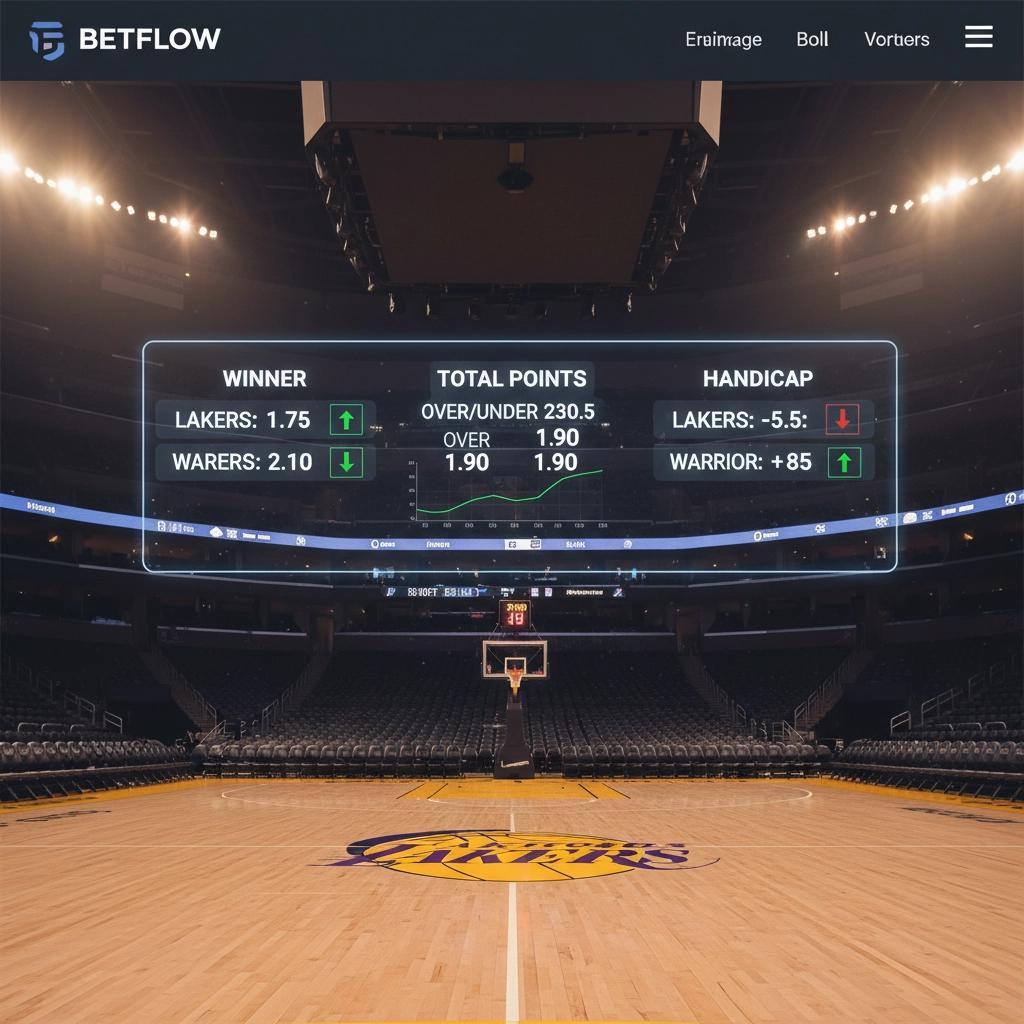
Why pre-game odds shift and the signals you should notice
Before tip-off, odds change because bookmakers and bettors react to new information. When you check lines several hours before a game you may see the favorite shorten or the spread move by a point; that movement is a market response to team news, betting volume, and perceived value. Understanding the most common drivers helps you interpret whether a move reflects smart money or public noise.
Common pre-game triggers
- Injuries and lineups: If a starter is ruled out, the moneyline, spread, and totals will often change quickly. You should watch official injury reports and late scratches.
- Sharp action vs. public action: Books monitor syndicates and professional bettors (“sharps”)—large bets from known accounts can move lines more than many small bets from casual bettors.
- Market balancing and liability: If too much money is on one side, bookmakers adjust lines to attract opposing bets and reduce risk; that can make a favorite shorter or longer depending on exposure.
- Situational factors: Back-to-backs, travel, rest, and home-court advantages are priced in and can be re-weighted as late information arrives.
How totals and handicaps respond differently to the same information
Lines for the number of points (totals) and handicaps (spreads) react differently because they measure different outcomes. The totals market focuses on pace and scoring efficiency; a sudden change to a team’s rotation that affects three-point shooting or free-throw attempts will move the total more than the spread. By contrast, the spread captures relative strength between teams, so changes that alter margin expectations—like a key defender being out—will primarily shift the handicap.
Practical examples of divergent movement
- Shooting guard ruled out: If a team’s best three-point shooter is inactive, totals may drop because expected three-point attempts and makes decline, while the spread changes only if that scorer also affects the margin.
- Big man injured: Loss of a rebounder/shot-blocker can increase the total (second-chance points) and move the spread if that player had strong influence on defense.
- Sharp over on totals: Heavy professional action on the over typically forces books to raise the total, even if the spread stays steady, because books want to discourage additional over bets.
As you follow these early moves, pay attention to which market is moving (moneyline, spread, or total), the timing of the move, and any correlated news. These clues tell you whether bettors are reacting to real on-court impact or just betting sentiment — and they set up the in-play dynamics that will be covered next. In the next section, you’ll learn how live-game events and pace changes drive in-play odds differently for winners, totals, and handicaps.
How specific in-play events move the three markets differently
Once the ball is live, odds respond to concrete, quantifiable events—scores, possessions, turnovers, fouls, and substitutions—rather than speculation. But each market reads those events through a different lens.
- Moneyline (winner): This market reacts most sharply to immediate win-probability swings. A late three-pointer, a sequence of turnovers, or a pivotal go-ahead basket will adjust the live moneyline quickly because the probability tree for final outcomes has fewer remaining branches. Possession and time remaining carry outsized weight; the team with the ball up by two with 10 seconds left will see its moneyline shorten rapidly compared with the same score in the first quarter.
- Handicap (spread): The spread compresses and expands based on expected margin over the remaining possessions. Key factors are current differential, remaining possessions (which are a function of game clock and pace), and fouls that stop the clock. A team that racks up quick transition points or forces repeated offensive rebounds will shift the spread more than a single isolated basket because those trends imply a sustained margin effect.
- Totals (points): Totals are driven by pace and scoring efficiency. A flurry of three-point attempts, an influx of free-throw opportunities, or bench rotations that increase offensive tempo will prompt totals to move. Conversely, long defensive stretches, slowdown tactics, or a player picked up on fouls that reduces shot attempts will push totals down even when the spread barely budges.
Timing, momentum, and the clock: when odds swing the most
Not all moments in a game are equal for market movement. Recognizing the time-value of events helps you interpret which fluctuations are noise and which present potential value.
- Early-game volatility: First quarter swings often overreact to small sample noise—hot shooting or early turnovers—so lines can be temporarily dislocated. Professionals generally avoid heavy action here unless there is clear evidence of a pace or rotation shift.
- Mid-game trends: By halftime or midway through the third quarter, patterns (sustained defensive breakdowns, bench matchups dominating) give a stronger signal. Books start re-aligning live spreads and totals to reflect stable in-game tendencies.
- End-game sensitivity: The final minutes are the most reactive. With few possessions left, bookmakers price in exact scenarios (score, possession, timeouts, potential free throws). Small events—an offensive rebound or a drawn foul—can produce outsized market moves and sharp odds as both books and bettors scramble to hedge or lay off liability.
Reading live-market signals and avoiding common pitfalls
Live betting offers opportunities, but it also amplifies market inefficiencies and behavioral bias. Use these practical heuristics when you trade in-play:
- Watch who’s moving the line. Large, repeated bets from sharp accounts or exchange sprays often presage more sustainable movement than a single public flurry.
- Contextualize momentum. A five-point run matters more if it changes possession dynamics (e.g., steals leading to transition points) than if it’s a single lucky shooting stretch.
- Factor in stoppages. Timeouts, reviews, and free throws change expected possessions and can reverse apparent momentum; lines often overreact immediately then retrace.
- Manage latency and execution. Odds update fast—delays between seeing an event and placing a bet can turn perceived value into overpaying. Use pre-set strategies for late-game situations rather than reactive impulse betting.
Applying these distinctions—how events map to each market, when movements mean more, and which signals to follow—lets you interpret live odds intelligently and increase the likelihood of finding real edges during games.
Putting it into Practice: disciplined steps for live bettors
Live betting rewards preparation and restraint more than intuition. Before you increase stake size, run simple experiments: trade small amounts on a few games, log outcomes, and compare your reads against how the line moved. Treat each session as data-gathering rather than a score to chase.
- Set strict bankroll rules and bet-sizing limits for in-play action to prevent emotional escalation during volatile stretches.
- Use a watchlist of teams and referees you understand deeply — familiarity with rotations, timeout tendencies, and foul patterns shortens the learning curve.
- Automate what you can: alerts for line moves, basic spreadsheets for tracking bets, and pre-defined exit rules reduce latency and emotional error.
- Keep a short post-game note on why you placed each bet and what signal you followed (possession advantage, free-throw sequence, substitution pattern). Over time these notes reveal which signals are reliable for the markets you trade.
For further reading on concepts like expected value and live-market mechanics, reputable betting resources can help deepen your framework: Pinnacle Betting Resources.
Frequently Asked Questions
How do specific in-play events affect the moneyline, handicap, and totals differently?
Moneyline adjusts to immediate win probability swings (possession, late-game scoring). Handicap (spread) shifts with expected margin changes over remaining possessions (running streaks, offensive rebounds, pace). Totals move based on pace and scoring efficiency signals (shot selection, free throws, substitutions) rather than purely who is likely to win.
When during a game should I expect the biggest and most reliable odds movements?
The most meaningful movements occur mid-game when patterns stabilize and late-game when the few remaining possessions make outcomes more deterministic. Early-game moves are often noisy and can overreact to small samples; mid- and end-game changes more reliably reflect real shifts in win probability or scoring expectations.
What are practical signs that ‘sharp’ money is moving the line?
Look for repeated, sizable stake-driven moves across multiple books or rapid exchange price changes. Sharp action often causes sustained line drift rather than single-book, temporary spikes; it may also coincide with changing limits or quick liability hedges by bookmakers.