
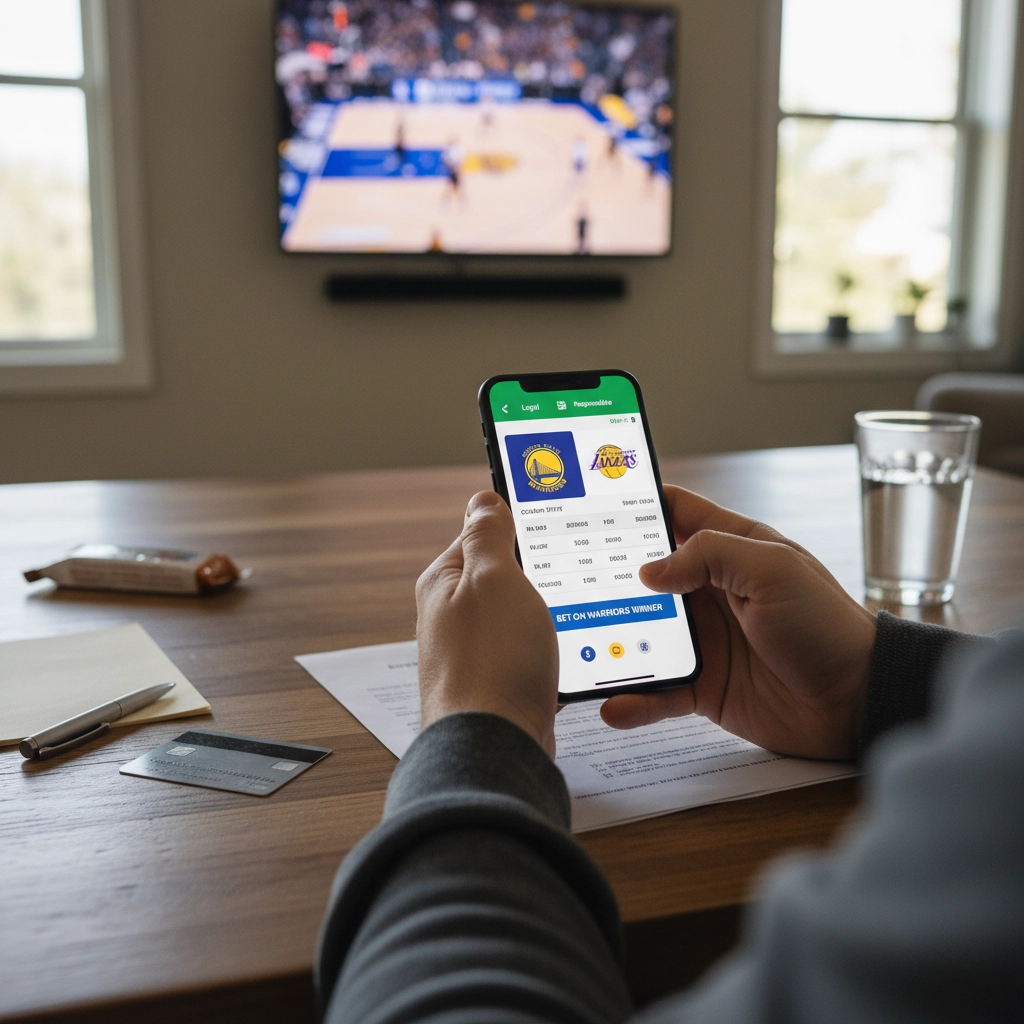
Verify legal requirements and choose regulated sportsbooks
Before you place a bet on which team will win, you need to confirm that sports betting is legal where you live and that you meet all age and identity requirements. You’re responsible for checking local and national laws—states, provinces, and countries differ on whether and how sports wagering is permitted. Using licensed, regulated sportsbooks protects you: they follow consumer-protection rules, provide clear terms, and usually offer self-exclusion and deposit-limit tools.
How to confirm legality and operator credentials
- Check your jurisdiction’s official gaming authority website for up-to-date rules and licensing information.
- Only sign up with sportsbooks that display a valid license number and regulator (state gaming commission, national gambling authority, etc.).
- Verify payment and privacy protections: regulated operators use encryption, reputable payment processors, and transparent KYC (know-your-customer) procedures.
- Avoid unregulated offshore sites — they may offer attractive odds but typically lack legal recourse, fair-play guarantees, and reliable payouts.
- Be aware of geolocation requirements: many operators only accept bets placed inside approved regions and use technology to enforce that rule.
Set responsible betting rules and basic bet knowledge
Betting on the winner is straightforward in concept, but doing it responsibly requires rules and a basic understanding of how odds and bet types work. Treat betting as entertainment rather than an income source. Decide in advance how much of your disposable entertainment budget you’ll allocate to wagering, and never stake money you need for living expenses, bills, or savings.
Practical responsible-gambling rules to follow
- Set a bankroll and stake size: determine a fixed amount you can afford to lose and establish unit sizes (for example, 1–2% of your bankroll per bet).
- Use time and deposit limits: enable daily/weekly/monthly deposit caps and session timers the bookmaker provides.
- Avoid chasing losses: increase in stakes to recover past losses typically makes things worse rather than better.
- Don’t combine betting with alcohol or emotional decisions—impulse bets are more likely to be poor bets.
- Monitor behavior and seek help: if you notice compulsive betting, use self-exclusion tools and contact local gambling support services.
Basic bet types and reading odds for a “winner” bet
The simplest way to bet on the outcome is a moneyline (straight) bet: you pick the team you expect to win. Odds show potential payout and implied probability—positive and negative formats (American, decimal, fractional) express the same information differently. Shop lines across several regulated sportsbooks to get the best odds, since small differences in price matter over time.
With these legal checks, responsible controls, and basic odds knowledge in place, you’ll be ready to move from general preparation to practical wagering techniques, line shopping, and bankroll management strategies in the next section.
Practical wagering strategies, line shopping, and measuring value
Once you’ve set a bankroll and understand basic odds, the next step is turning that foundation into consistent, value-oriented wagering. Small edges compound; your goal is to find and wager when the available price offers positive expected value, not to guess winners more often than you lose.
– Shop lines across multiple regulated sportsbooks. A half-point or even a small difference in moneyline price changes your expected return over many bets. Use odds-comparison sites or maintain accounts at several operators so you can quickly take the best number.
– Understand the vig (juice) and how it affects value. Books set prices to earn a margin; look for markets where the implied probabilities add up to less excess vig, and prefer operators with competitive pricing.
– Track closing-line value (CLV). CLV is the difference between the price you took and the market price at kickoff. Consistently getting better than closing line is a strong indicator you’re finding edges; consistently taking worse-than-close lines suggests you need to change your sources or timing.
– Use promotions smartly. Welcome bonuses, odds boosts, and enhanced offers can improve your value if you read rollover terms and stick to bets you would make anyway. Don’t take suboptimal bets just to clear a bonus.
– Adopt a staking strategy. Flat-betting a fixed unit (for example 1–2% of bankroll per bet) reduces variance and helps longevity. More advanced methods (proportional staking or a conservative Kelly fraction) can be used if you maintain accurate edge estimates—Kelly is powerful but volatile and sensitive to input errors.
– Keep records and calculate ROI. Log stake, odds, bookmaker, bet type, and notes. Review performance by sport, market, and stake size to find strengths and leaks.
Above all, treat your account like a small business: analyze outcomes, learn from mistakes, and be disciplined about timing and line acceptance. If you consistently bet at worse prices than the closing market, no amount of “gut” will overcome the bookmaker’s edge.
Handicapping fundamentals and responsible in-play (live) betting tips
Good handicapping combines objective data with situational awareness. For basketball “winner” bets, focus on matchups and context as much as raw form.
Key pre-game factors:
– Matchups: how does a team’s style (tempo, perimeter shooting, interior defense) line up against the opponent? A fast team playing a slow opponent may generate higher scoring variance.
– Availability: injuries, suspensions, and last-minute scratches change win probability more than advanced metrics. Wait for official confirmations.
– Rest and travel: back-to-backs, long flights, and time-zone changes materially affect performance.
– Advanced stats to consult: offensive/defensive efficiency, effective field-goal percentage (eFG%), turnover rate, free-throw attempt rate, and rebound differential—each reveals aspects of strengths and weaknesses that moneyline odds may not fully capture.
Live-betting cautions and tactics:
– Latency matters. Odds move quickly on injury reports and momentum; rely on official feeds and trusted live markets rather than social media rumour.
– Use smaller stakes in-play. Volatility is higher; consider reducing unit size (e.g., half your usual flat unit) to limit risk.
– Don’t chase momentum blindly. Runs are common; assess whether a swing is sustainable (foul trouble, rotation changes) or short-term noise.
– Hedging and cash-outs are tools, not cures. Hedge only when it improves your expected value or locks in a meaningful gain consistent with your plan.
– Maintain emotional control. Live markets are built to provoke response; if you feel pressured to “do something,” step away and re-evaluate.
Combining disciplined line-shopping, sound staking, and rigorous handicapping will help you bet on winners responsibly and with a realistic approach to risk and reward.
Final notes on staying legal and responsible
Betting on the winner in basketball can be enjoyable and intellectually engaging when approached as a disciplined activity rather than a shortcut to profit. Keep your choices legal by using regulated operators in your jurisdiction, protect your bankroll with clear rules, and treat each wager as a data point to learn from. If gambling ever feels less like entertainment and more like compulsion, seek help promptly — resources such as BeGambleAware can guide you to support and self-exclusion options. Responsible bettors prioritize longevity, clear-headed decision making, and continuous improvement over chasing quick wins.
Frequently Asked Questions
How much of my bankroll should I risk on a single moneyline bet?
Many responsible bettors use flat-betting of 1–2% of their total bankroll per bet to limit variance. More conservative bettors go lower; aggressive or edge-based approaches (like a fractional Kelly) require accurate win-probability estimates and greater risk tolerance.
When is live betting on a game a good idea versus sticking to pre-game wagers?
Live betting can offer value when you have faster or better information about in-game events (injuries, rotations, foul trouble) than the market or when you exploit short-lived inefficiencies. Use smaller stakes in-play due to higher volatility, and avoid reacting to momentum without evidence it’s sustainable.
Why is line shopping important and how do I measure if I’m getting value?
Different sportsbooks post different prices; even small moneyline differences compound over time. Shop lines across multiple regulated books and track closing-line value (CLV): consistently beating the closing line suggests you’re finding value, while routinely taking worse-than-close lines indicates you should change timing or sources.