
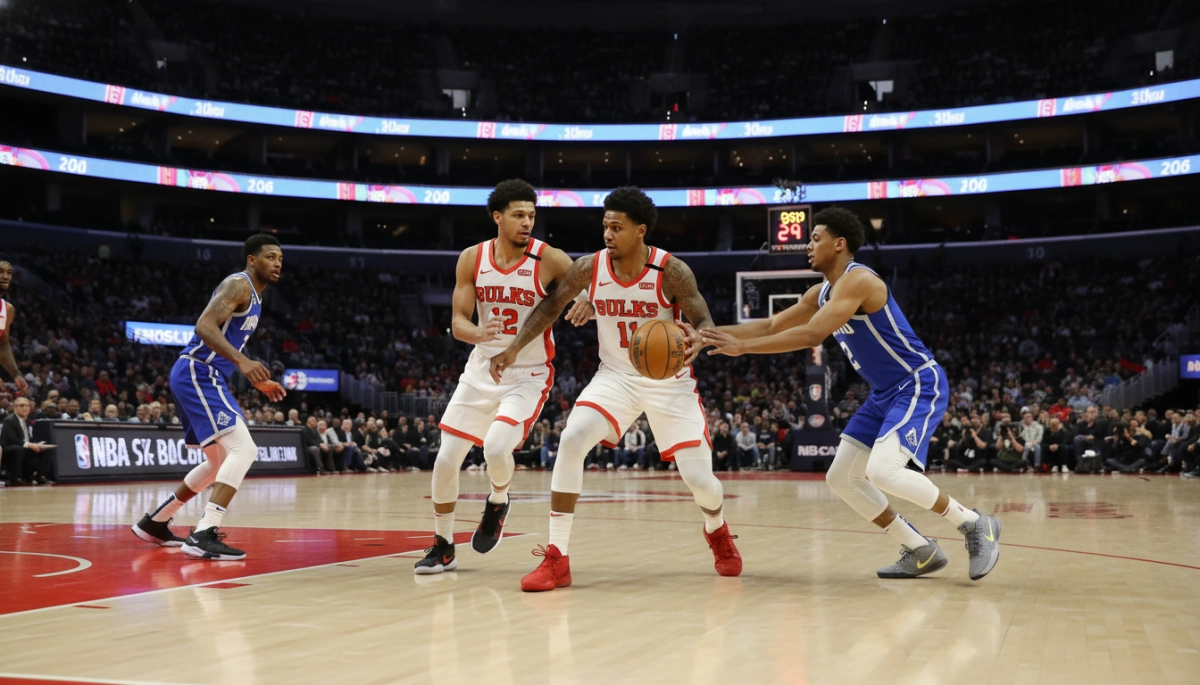
Why the modern NBA pick-and-roll is the engine of consistent offense
You rely on the pick-and-roll more than almost any other play to generate high-quality shots. In today’s NBA, it’s not just a two-man action — it’s a spacing and decision-making framework that creates mismatches, forces defensive communication, and opens driving lanes for cutters and shooters. When you master the fundamentals, you turn a simple screen into a multi-option attack that makes defenses pay for mistakes.
Establishing the foundations: roles, spacing, and legal screening
Start by defining clear responsibilities. Each player on the floor must understand how their position affects reads and reactions. These fundamentals form the scaffolding for every modern variation you’ll run.
Role of the ball-handler
- You must read the on-ball defender’s leverage the moment the screen is set: is the defender over the top, under, or aggressively hedging?
- Maintain versatile dribble options — change of pace, hesitation, and tight crossing so you can attack either shoulder depending on the defender’s reaction.
- Identify the immediate pass targets: roll man, pop man, weak-side shooter, or cutter. Your first read is the roll; your second is the kick or skip depending on cleanup rotation.
Role of the screener (the roller)
- Set a legal, firm screen: feet set, low base, and minimal movement. You want chest-on-chest contact but no offensive foul — practice timing to avoid offensive charges.
- Read the defender’s reaction quickly: if they over-commit, you slip; if they underplay, you seal and roll hard to the rim; if you’re a floor-spacing big, you can pop out for a three.
- Use short roll, rim roll, and pop as primary options; your choice depends on spacing and the ball-handler’s tendencies.
Spacing and shooter alignment
You must space the floor to punish help defense. Typical alignments place a spot-up shooter in the weak corner, a secondary ball-handler on the strong-side wing, and a rim-runner or rebounder on the weak-side block. Proper spacing stretches the defense and creates driving lanes and kick opportunities.
- Keep shooters in corners and wings to maximize driving lanes.
- A delay by the weak-side defender often equals a clean kick-out; time your drives to exploit that pause.
- Adjust spacing when facing drop coverage — shorten the distance to the rim for the roller and extend it for shooters so the defense must choose.
These fundamentals — precise screening, rapid reads by the ball-handler, and disciplined spacing — are the baseline. Next, you’ll learn to read specific defensive coverages (hedge, drop, switch) and deploy counters like slips, re-screens, and spacing adjustments that convert reads into points.
Reading and countering common coverages: hedge, drop, and switch
Mastering the pick-and-roll means first recognizing how the defense chooses to stop it. Your reads must be immediate and decisive — hesitation kills the play. Here’s what to look for and how to respond in real time.
- Hedge (hard/soft): If the screen defender steps out aggressively to contain the ball-handler, you have less space to attack with the dribble but a vulnerability for the roller. Ball-handler reads:
- Explode over the top only if you can beat the hedge; otherwise, use a quick pocket pass to the roller.
- Create a pocket pass angle by bending your path toward the double-team side; this shortens the hedge and makes the pass easier.
Roller reads:
- Slip when the hedge shows early and high — a well-timed slip often results in a layup before the hedger recovers.
- If the hedge is contained but slow to retreat, short-roll to the mid-range paint for the kick-out or a roll-and-pop decision.
- Drop coverage: The screener’s defender sags between the roller and the rim, protecting the paint. This makes life easier for shooters but harder for rim finishes.
- Ball-handler reads: attack the drop’s gap with controlled pull-ups or floaters; if the drop defender lurches up to challenge, kick to the corner shooter.
- Roller reads: pop to the short corner or slot area rather than full-roll if the drop defender stays glued. Positioning matters — occupy the soft spot where the drop defender can’t contest both rim and perimeter.
- Spacing tweak: slide a shooter to the opposite corner to punish the drop — longer kick passes are harder to contest and open three-point opportunities.
- Switching: When defenders switch, mismatches are created. The goal is to force the switch and then exploit size/speed differences.
- Ball-handler reads: if you draw a slower big, attack with quick dribble moves or isolation dribbles; if you’re switched onto a bigger defender, look to utilize ball screens again or use the mismatch to kick to shooters.
- Roller reads: if you end up on a smaller defender, seal and dump for easy post touches; if you’re on a quicker guard, use a hard roll to the rim and expect more help-side rotations.
- Team response: immediately re-screen the mismatch, hand the ball off into a post-up, or run a flare/pin-down to drag the bigger defender away from the hoop.
Advanced counters: slips, re-screens, staggered spacing, and secondary actions
Once you can predict coverage patterns, add layers that force defenses into impossible choices. These counters hinge on timing, angle, and synchronization with weak-side actions.
- Slips and ghost screens: The most efficient counter. Teach your screener to sell a solid set, then instantly slip to the rim on early show/overplay. Success depends on the ball-handler’s ability to sell the “read” with eyes and shoulders before delivering a lead pass.
- Re-screens and stagger: If the defense fights through the first screen or switches effectively, follow with a quick re-screen at a different angle. Staggered or double screens disrupt communication and create brief windows for curl, pop, or catch-and-shoot looks.
- Staggered spacing and secondary actions: Use pin-downs, elevator sets, or weak-side drags to keep defenders occupied. A successful weak-side curl or back-screen often forces the help defender into a choice: stop the cutter or contest the roller. Either way, you get an advantage.
- Tempo and clock management: Attack coverages early in the shot clock to exploit the defense before rotations tighten. Conversely, use late-clock quick actions — slip into a downhill rim attempt — when the defense is scrambling to hedge time.
- On-court drills: Practice live 2-on-2 with mandated hedges, drops, or switches to train split-second reads; run 3-on-3 with stagger and re-screen sequences to internalize spacing and timing under game pressure.
These counters convert defensive tendencies into scoring chances. In the next section we’ll break down personnel-specific pick-and-roll playbooks — how to design actions for elite creators, mobile bigs, and sharpshooting lineups.
Designing pick-and-roll systems for your personnel
Translate the principles above into plays that suit who you have on the floor. The same framework looks different depending on your lead ball-handler, your screener’s mobility, and the perimeter shooting available. Below are practical templates to match personnel types to pick-and-roll roles.
Elite creators (primary ball-handlers)
- Run downhill actions early in the clock with staggered spacing to free the creator for angle-of-attack isolated dribble drives.
- Use slip-to-roll sequencing: sell a strong screen, then slip on early show to exploit hedges and create high-percentage layups or kick-outs.
- Integrate read-and-react sets — allow the creator to call for re-screens or flare screens when defenders over-commit.
Mobile bigs (switchable rim threats)
- Prioritize rim-rolls and short-rolls that force help; a mobile big dragging a defender off the rim creates paint opportunities and offensive rebounds.
- In switch-heavy defenses, use the big as a screener who can pop to the elbow or short corner; this stretches mismatches and opens pick-and-pop threes.
- Teach the big to space weak-side and read when to hedge vs. drop to maximize mismatch creation.
Sharpshooting lineups (pace-and-space)
- Run pick-and-pops and slip sequences that prioritize kick-outs; position shooters in corners and on the opposite wing to widen driving lanes.
- Use staggered screens and elevator actions to free catch-and-shoot opportunities while the pick-and-roll occupies help defenders.
- Encourage quick ball reversal and skip passes — spacing combined with accurate swings makes drop coverage untenable.
Hybrid small-ball units
- Exploit mismatches by allowing smaller players to screen and roll, forcing switches that lead to isolation or dribble hand-offs into post-ups.
- Use motion screens and slip/dribble hand-off (DHO) variants to prevent help defenders from comfortably sagging.
- Emphasize conditioning and rotation speed—small-ball relies on out-running less mobile coverages and converting in transition off pick-and-roll breaks.
Putting concepts into practice
Make the playbook habitual through progressive practice: start with 2-on-2 reads, add weak-side shooters and then incorporate live 5-on-5 scrimmages. Track progress with film study and targeted metrics (turnover frequency on the roll, assists out of P&R, corner three attempts). Reinforce coaching cues: quick eyes, decisive attacks, consistent screen technique, and spacing discipline.
Next steps and closing perspective
Mastery comes from the grind — deliberate practice, thoughtful film work, and continual adjustment to opponents. Focus on building repeatable habits: crisp screens, immediate reads, and synchronized spacing. Use analytics and scouting data to refine which pick-and-roll sets produce your best looks; a good starting resource is NBA play-type stats to see how different coverages and lineups convert in the real league. Keep evolving your actions, teach players the why behind each decision, and the pick-and-roll will remain the engine that drives efficient offense for your team.