
[Start HTML content here]
Why mastering the transition offense makes your team faster and smarter
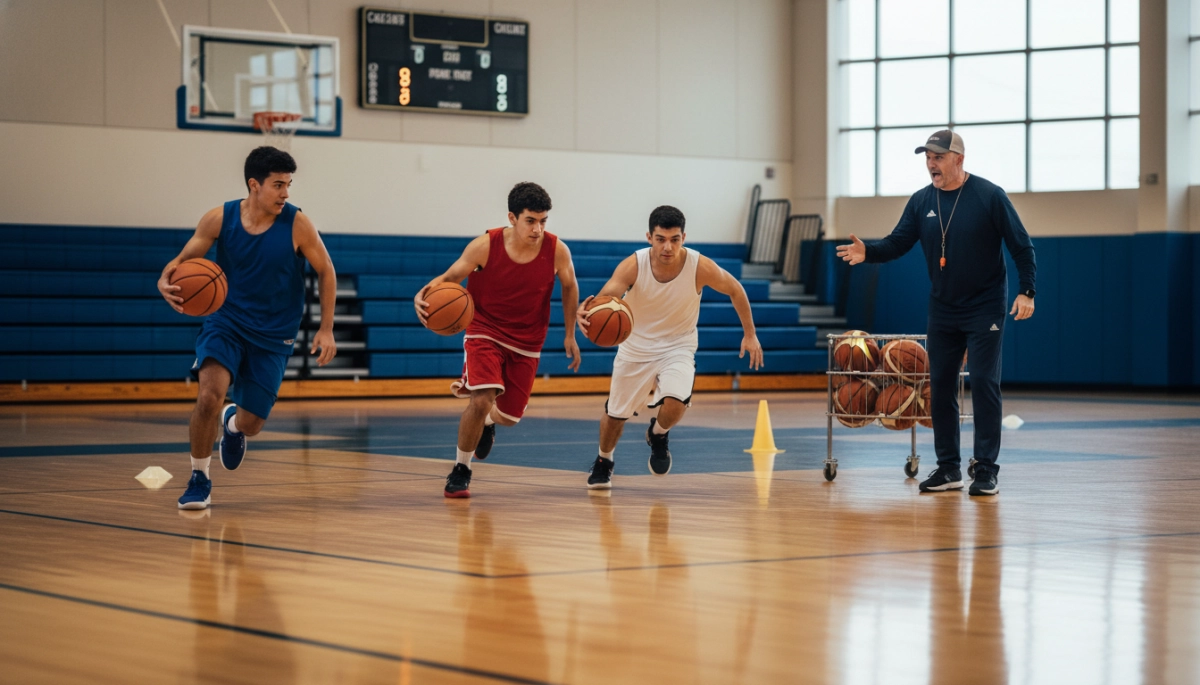
You win more possessions and create easier scoring when your transition offense is fast, efficient, and controlled. As a player or coach, you need drills that build sprint mechanics, quick reads, and reliable finishing under pressure. These coach-approved reps focus on the physical speed of the break and the mental speed of decision-making so you consistently turn defensive stops into high-percentage opportunities.
Expect each drill to emphasize three repeatable outcomes: a clean outlet and sprint, purposeful spacing and lane reads, and a reliable finish or kick-out. When you train those outcomes with short, high-intensity reps, you develop muscle memory that translates directly to game speed.
Key foundational drills to train sprinting, spacing, and reads
Start here to establish the core movement patterns and reads every player must execute in transition. Each drill includes coach cues, rep recommendations, and progressions so you know how to scale intensity.
Outlet & sprint mechanics drill
- Objective: Clean outlet pass, fast first two steps, controlled top speed.
- Setup: Defender rebounds, outlet passes to a guard at the elbow. Two lines at half-court.
- Execution: On the rebound, the ball-handler outlets to the guard who takes two power steps then sprints. Focus on low hips, quick arm pump, and accelerating past the rim line.
- Coach cues: “Secure the rebound, strong outlet, choppy first steps, full extension on the sprint.”
- Reps/Progression: 6–8 reps per player; progress to a live 2-on-1 after the sprint for finishing practice.
3-man weave with finish variations
- Objective: Timing, handoffs, spacing, and finishing at the rim or kick-out.
- Setup: Three lines at baseline. Full-court weave at game pace.
- Execution: Players execute the weave without dribbling until the lane opens. On the final pass, decide to finish, euro-step, or drive-and-kick. Emphasize the first touch decision.
- Coach cues: “Eyes up on the floor, explosive fill-the-lane runs, decisive finish.”
- Reps/Progression: 8–10 full-court trips; add a trailing defender to force quicker reads.
2-on-1 push-and-finish
- Objective: Teach the ball-handler to read the trailer and the trailer to time the cut.
- Setup: Start at defensive end with one defender and two offensive players. Outlet, sprint, and attack the rim in a coached 2-on-1 scenario.
- Execution: Ball-handler attacks downhill; if the trailer is open, hit the layup or reverse; if not, finish strong or execute a controlled pull-up.
- Coach cues: “Attack the middle, keep the dribble alive, balance finish or kick.”
- Reps/Progression: 10–12 reps, then rotate defenders for variable pressure.
These foundational reps build the physical and cognitive habits you need for effective transition play; next, you’ll learn how to sequence these drills into a practice plan and add competitive constraints that force game-speed decision-making.
Sequencing drills into a full-court practice flow
To convert isolated reps into reliable game habits, structure practice so players experience the same rhythm and decision points they’ll face in games. Use short, fast blocks with clear objectives: warm-up + technical reps, decision-making under pressure, and competitive scrimmage. Here’s a sample 30–40 minute transition block that stacks the drills you already ran.
- 5 minutes — Dynamic warm-up & sprint mechanics: High knees, A-skips, butt kicks, 2×30-yard sprint exchanges focusing on choppy first steps and arm drive.
- 8 minutes — Outlet & sprint mechanics (controlled): 6–8 reps per player emphasizing secure outlets and two explosive power steps. Coach corrects body angles and first-step posture.
- 8 minutes — 3-man weave variations: Run 6 full-court trips at 80–90% speed; on trip 3 and 6, add a trailing defender to force earlier decision-making. Emphasize lane fill and fill-the-lane runs.
- 8 minutes — 2-on-1 push-and-finish (live): Rotate defenders every possession for variable reads. Aim for 10–12 total reps; track successful read/finish outcomes (finish/kick/pull-up).
- 8–10 minutes — Competitive 3-on-2 → 2-on-1 progression: Start with a defensive rebound to offense break; after the initial 3-on-2, the defensive team transitions to a 2-on-1 the other way. Use score to keep intensity — first to 5 wins.
Keep coach input short and specific between reps. Correct one focus point per rotation (e.g., “choppy first steps” or “hit the trailer on the move”) rather than overcoaching. This preserves intensity and builds motor learning.
Competitive constraints that force game-speed decision-making
To get players to read and react at game pace, add rules and scoring that simulate consequences. Constraints create pressure without needing full-game fatigue and teach players which choices win in transition.
- Shot-clock constraint: Limit transition possessions to 6–8 seconds. This forces quicker reads and a go-to finish or rapid kick-out.
- Points for speed and efficiency: Award 2 points for a rim score within 6 seconds, 1 point for a made jumper, and -1 for a turnover. Keeps emphasis on finishing early and protecting the ball.
- Defender incentives: Give defenders a bonus point for forcing a pull-up or contested layup. This pushes offensive players to read better and defenders to close the gap smartly.
- Fatigue factor: After every made basket, the offensive team sprints back and must execute a live defensive stop before getting the ball for another break. This simulates in-game recovery and forces cleaner outlets under fatigue.
Use video clips of practice reps to show quick wins and teachable moments. When players see the outcomes of rushed decisions versus patient reads, the learning accelerates.
Progress tracking, common corrections, and situational tweaks
Track a few objective metrics each session: outlet-to-rim time, percentage of successful trailer reads, turnovers per transition possession. Small data points reveal trends and pinpoint practice priorities.
- Common corrections: close-out on outlets (coach the rebounder to pivot and face the floor), fix lazy lane fills (require full-speed fills or substitution), and clean up the first touch (one-dribble finishes only on specific reps).
- Situational tweaks: Practice late-clock transition (8 seconds left) where the defense can set up a semi-contest; run numbers-up scenarios (4-on-2) to teach spacing; simulate defensive breakdowns where the trailer must spot-up and hit the open 3.
- Weekly progression: Increase live defenders, shorten shot-clock windows, and track improvements in the metrics. Reward teams that improve efficiency under constraints with starting positions in the next competitive drill.
These sequences and constraints bridge the gap between isolated reps and reliable game-speed transition offense — giving your team the structure and stress needed to perform faster, smarter, and with purpose.
Season integration checklist
- Block out a 30–40 minute transition segment in at least two weekly practices and stick to it.
- Assign measurable goals: outlet-to-rim time, trailer-read percentage, turnovers per transition; record them each session.
- Rotate defensive pressure and vary constraints weekly (shorter shot clocks, extra defenders, fatigue sprints).
- Use brief video clips to highlight correct reads and quick fixes — share 1–2 teachable moments with the team after practice.
- Progress reps: technical → pressured → competitive. Increase difficulty only when baseline metrics improve.
Putting the work into practice
Train transition like a skill, not an afterthought: consistent, purposeful reps and simple metrics will compound into real game advantages. Keep coaching cues short, make each rep count, and let constraints create the pressure your team will see on gameday. If you want more drill variations and progressions to rotate into your plan, check out Breakthrough Basketball drills for additional options. Stay patient, track progress, and prioritize the three outcomes that win transition possessions — clean outlet, purposeful spacing, and decisive finishing.