
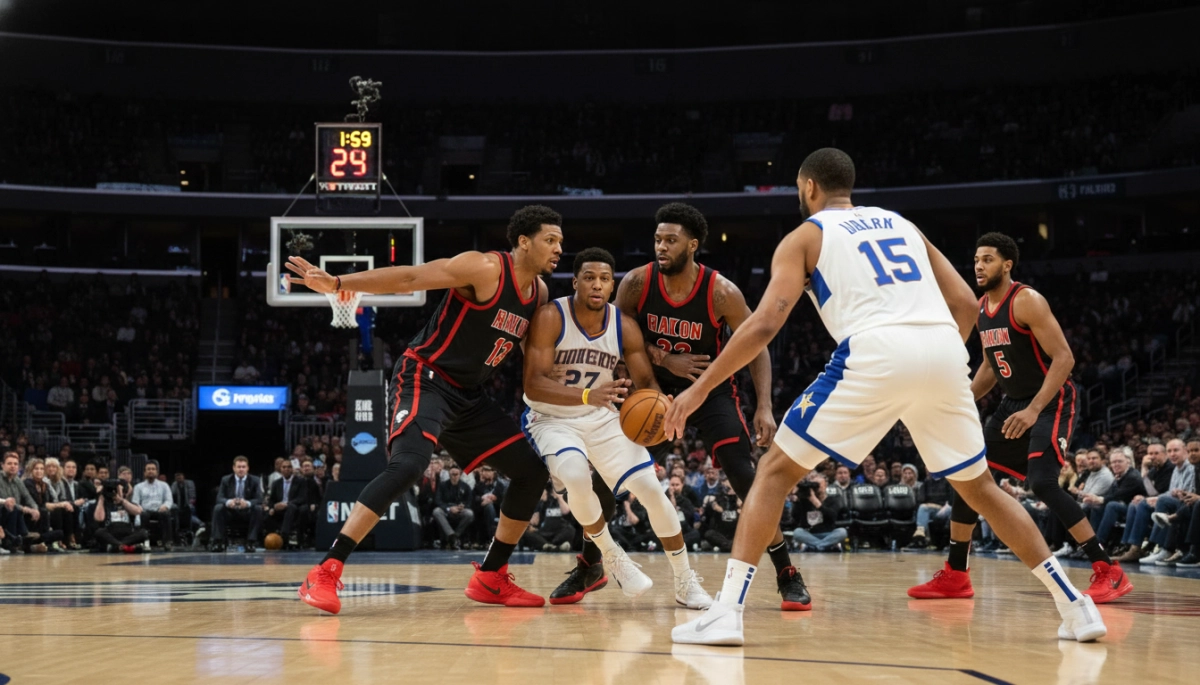
Why the Pick-and-Roll Is the Engine of Modern NBA Offense
The pick-and-roll is the most frequently run play in the league because it creates straightforward options: a drive for the ball-handler, a roll to the rim, or an open shooter. As a defender, you need to understand not just the immediate actions but the decisions that follow. Stopping the pick-and-roll isn’t about one perfect move; it’s about a coordinated series of choices by the on-ball defender, the screener’s defender, and the weak-side help. When you learn the common defensive options, you can anticipate reads and reduce easy scoring chances.
Core Defensive Options Against Ball-Screen Actions
Teams rely on a handful of repeatable strategies to neutralize the primary action. Each choice affects spacing, rotations, and which mismatches you must live with. Below are the principal tactics and the responsibilities you’ll see on the court.
Hedge (Hard Show)
- What it is: The screener’s defender steps out aggressively to momentarily stop the ball-handler’s progress.
- Your responsibility: If you’re the on-ball defender, use the hedge as a moment to force a reset or find help; if you’re the screener defender, time the hedge to buy recovery time without getting screened out.
- Strengths: Disrupts downhill drives and forces the offense to re-screen or kick out.
- Weaknesses: Can create open threes if rotations are slow or a mismatch if the hedger gets too deep.
Switch
- What it is: Both defenders exchange assignments, taking the nearest offensive player rather than fighting through the screen.
- Your responsibility: You must be comfortable defending the new matchup; communication and awareness of ball and shooter are critical.
- Strengths: Eliminates the immediate action and simplifies rotations.
- Weaknesses: Can produce size-speed mismatches—especially dangerous when a big is forced to chase a quick guard.
Drop Coverage
- What it is: The screener’s defender sags back into the paint to take away the roll and protect against the drive.
- Your responsibility: As the on-ball defender, you must contest pull-up jumpers while avoiding getting beat to the rim.
- Strengths: Keeps the shot-blocker near the rim to deter rolls and alley-oops.
- Weaknesses: Leaves space for mid-range or three-point shooters and can invite kick-outs.
These three choices—hedge, switch, drop—form the backbone of how teams start to stop pick-and-rolls. Less common but situationally vital variations include trapping the ball-handler at the screen and “ice” or “blue” techniques that push the play sideline-first. Understanding the trade-offs for each tactic will let you predict which teams will lean one way or another based on personnel and game context.
In the next section, you’ll see how matchups, personnel decisions, and in-game adjustments determine which of these strategies a team uses and how rotations and communication finish the job on the defensive end.
How Personnel Shapes Defensive Choice
Personnel is the single biggest determinant of which pick-and-roll strategy a coach will favor. If you have multiple switchable wings and a mobile big who can guard on the perimeter, your team can lean into switching more aggressively because the risk of a mismatch is lower. Conversely, teams built around an elite rim protector and a slower big are likelier to employ drop coverage to take away rolls and protect the paint. On nights when a team’s best perimeter defender is out, you’ll see more hedges and traps to hide that weakness and force ball-handlers into contested jumpers.
Matchups within individual possessions matter, too. Against a quicker guard who can punish soft hedges, defenses might choose a hard hedge or a trap. Against a volume-shooting point guard, the screener’s defender might recover earlier to contest pull-ups. Smart teams tailor their approach not only to their roster construction but to the opponent’s strengths—so you’ll often see defenses flip between tactics within the same game depending on who’s on the floor.
Rotations and Communication: Turning Choices into Stops
Making a chosen tactic work requires disciplined rotations and clear communication. When the screener’s defender hedges, the weak-side defender must rotate down to cover the roll or the rim; if they don’t, the hedge simply creates a free lane. When switching, wing defenders need to identify shooters early and rotate to contest kick-outs. Drop coverage demands that the on-ball defender sink enough to prevent the drive while the baseline help closes out to contest threes.
Verbal cues and eye contact are central: the ball-defender calling “screen” or “ball” alerts teammates, the hedger shouting “I got it” prevents double efforts, and the help-side big signaling recovery avoids late rotations. Footwork matters in closeouts—closing under control to force a corner baseline dribble or cutting off the straighter driving lane reduces easy decisions for the offense. Practice these rotations until they’re second nature; the difference between a stop and a scramble is often a half-step.
In-Game Adjustments and Game-Planning
Coaches win adjustments, not surprises. Pre-game scouting dictates a baseline strategy, but halftime and in-game tweaks are where defenses earn stops. If an opponent exploits a particular coverage—say, consistently beating hard hedges with dribble-screens—the coach might shift to more drops or switch calls for that matchup. Conversely, if an offense struggles finishing at the rim, teams will widen their drops to concede more threes.
Timeouts are used to clarify assignments after a costly sequence: who’s picking up the roll, who rotates to the corner, and who must step up on a shooter. Momentum swings can also change approach—late-game situations often favor switching to avoid scramble rotations and simplify assignments. The best defenses are flexible: they prepare a primary plan, recognize patterns, and adapt in real time so the pick-and-roll becomes predictable—and stoppable.
Practice Drills to Build Consistency
- Shell with live screens: Add timed ball-screens to the traditional shell drill so defenders practice hedges, drops, and switch calls under controlled pressure.
- Hedge-and-recover reps: Run 2-on-2 sets where the screener’s defender must hedge and then recover within a specified step count to train timing and avoidance of over-commitment.
- Switch-awareness drills: Use quick-substitution scrimmages that force defenders into unexpected switches to build comfort on less-favorable matchups and communication habits.
- Closeout and rotation chains: Start from a hedge or drop, then simulate kick-outs to the corner so weak-side defenders practice sprinting, closing out under control, and securing rebounds.
- Film + on-court translation: Pair short film sessions highlighting opponent tendencies with immediate on-court reps to reinforce recognition and correct reactions.
The Defensive Mindset
Stopping the primary pick-and-roll is less about perfect technique on a single play and more about a culture of communication, repetition, and honest in-game adjustments. Coaches and players should prioritize practice that forces decision-making, honest film review to expose tendencies, and the flexibility to change tactics when the opponent dictates. Small details—clear calls, disciplined footwork, and recovery instincts—compound over the course of a game and season. For a deeper look at the play itself and how it evolved, see this primer on the pick-and-roll. Commit to the process, and the play that fuels modern offense will become a repeatable stop for your defense.