Becoming the paint anchor: how your role affects team defense
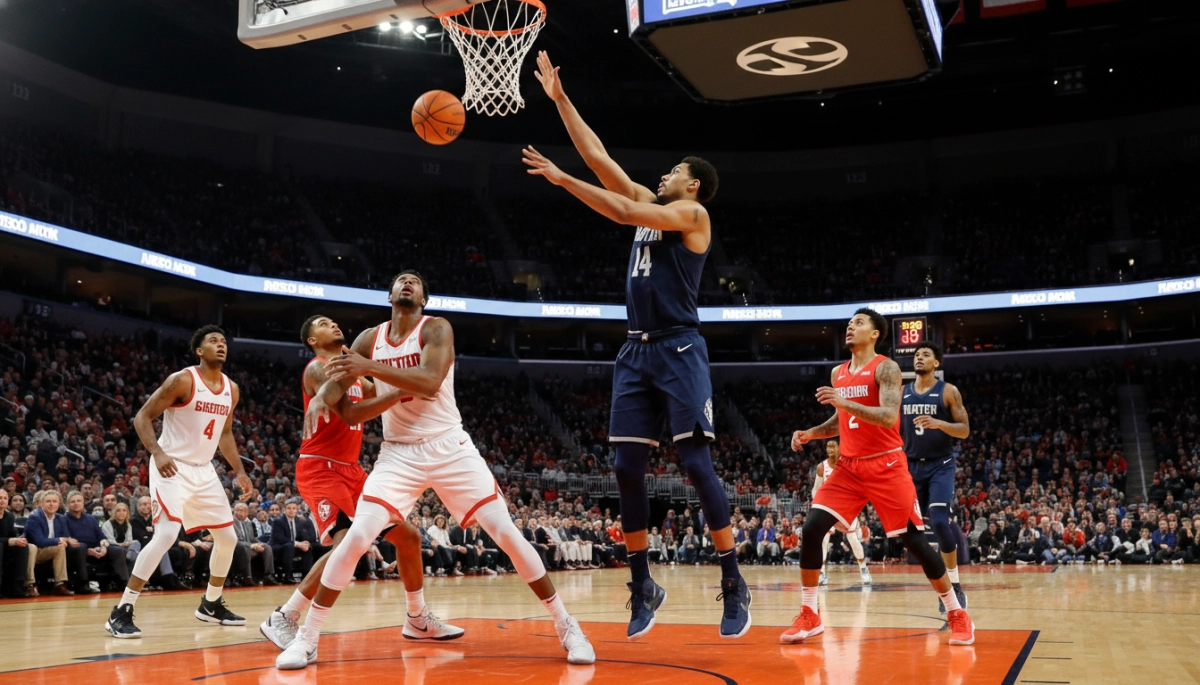
As a big, you are the last line of defense and the first line of transition offense. You must read the floor, protect the rim, and secure rebounds while communicating rotations to teammates. When you accept that your primary job is to limit high-percentage shots at the rim and finish possessions with a rebound, your team’s defensive identity becomes more stable and aggressive.
To be effective you’ll blend physical skills (timing, verticality, strength) with intellectual ones (anticipation, rotation discipline, and communication). Below are the foundational responsibilities you should prioritize on every defensive possession.
- Protect the paint: contest drives without fouling and take away straight-line lanes to the rim.
- Control the glass: boxing out is non-negotiable; securing defensive rebounds ends possessions.
- Direct help: point out switches, screens, and weak-side threats so perimeter defenders can trust your help.
Mastering rim protection: stance, timing, and disciplined contests
Rim protection isn’t just about shot-blocking — it’s about deterrence. Your goal is to change the shooter’s path, force them to alter release, or funnel them to defenders. To do that consistently, focus on three technical elements.
1) Proper stance and jump timing
- Maintain a balanced stance: hips low, feet shoulder-width, ready to slide laterally or vertical-jump straight up.
- Time your verticality: challenge shots at the apex rather than lunge into the shooter, which draws fouls and gives up positioning.
- Use shot-fake discipline: don’t bite on pump fakes; trust your help rotation and use body positioning to contest instead.
2) Angling and funneling drives
Instead of always blocking, aim to force ball handlers into predictable help or baseline gauntlets. Take away the middle by showing over the top of the drive and guiding attackers toward a teammate or the sideline, reducing high-quality finishes.
- Show over the top to take away center penetration.
- Use the sideline as an extra defender—limit the ball handler’s space.
- Communicate when you step to help so weak-side defenders recover accordingly.
Rebounding fundamentals: positioning, boxing out, and finishing possessions
Securing defensive rebounds removes second-chance opportunities and fuels your team’s offense. Rebounding starts before the shot goes up — you must lock onto your assignment, locate the ball, and win the initial physical battle.
Key habits for consistent rebounds
- Identify your box-out target early and establish inside position.
- Sprint to the ball on misses; don’t rely on chance—move with purpose toward the preferred rebound area.
- Use strong hands and a wide base to protect the ball when grabbing and initiating the outlet pass.
Mastering these rim protection and rebounding basics sets you up to handle the more advanced responsibilities of switching, hedging, and fighting through screens. In the next section you’ll learn practical ways to execute and communicate switches effectively within team schemes.
Switching intelligently: when to commit and how to execute
Switching is a weapon when applied selectively. It eliminates confusing scramble plays, simplifies help responsibilities, and neutralizes pick-and-roll mismatches—if you choose the right moments and execute cleanly.
When to switch
– Personnel matchups: switch when your foot speed and lateral agility allow you to stay in front of the ball-handler without giving up easy shots. Avoid switching onto elite perimeter creators unless help is imminent.
– Screen type and spacing: switch when the screen happens near the sideline or baseline and the curling action is more likely than an isolation. Switch less on high-screen, top-of-key actions that invite skilled pick-and-roll reads.
– Game context: late-clock possessions or when the offense runs multiple off-ball movers are good switch candidates because continuity reduces playmaking advantage.
How to switch cleanly
– Call it early and loudly. A single, decisive call (“switch!” or “I got!”) removes hesitation and prevents two defenders from abandoning their assignments.
– Pass responsibility instantly. The incoming defender must take the ball-handler without chasing from behind; the outgoing defender travels to the new matchup while maintaining awareness of the rim.
– Match blame with body control: when you switch onto a guard, play low, move laterally, and use active hands to bother passing lanes. When you switch onto a post threat, establish position between them and the rim and utilize verticality on touches.
– Transition recovery: if a switch creates a mismatch, rotate weak-side defenders to double, or front the post while another defender digs and attempts to contain. Trust rotations rather than gambling for one-block plays.
H2>Hedging, showing, and recovering on screens: protect the rim without abandoning ground
Bigs are often asked to hedge or “show” on ball screens to prevent direct rim attacks. The goal is to buy time for your teammate’s recovery without getting smoked off the bounce.
Hedging basics
– Small, explosive step out: jab step into the ball-handler’s path to disrupt timing. Your hands should be up to take away pull-up lanes, not down where they can be easily beaten.
– Angle and depth: show too far out and you’re a cutter’s target; stay compact—big enough to deter straight-line drives, shallow enough to pivot back to your man.
– Duration: make the show long enough for the on-ball defender to recover, then recover under control. Overstaying invites pick-and-pop threes or seam passes.
Recovery techniques
– Shuffle back under control, using a short hop-step to reorient toward your original matchup while keeping the ball in your visual cone.
– Use the screening defender’s momentum to slip past and regain verticality. If you hedge hard, anticipate the need to sprint back and box out immediately.
– Communicate continuously: calls like “step,” “switch,” or “I’m out” let teammates read your intent and cover seams.
Coverage alternatives
– Soft hedge or drop coverage: use against guards who can shoot—sag into the paint to protect the rim while daring the ball-handler to shoot over you.
– Ice or force: on sideline screens, deny the middle and force away from the screen, allowing the big to bump the path without leaving the rim unguarded.
Mastering these choices—when to switch, how hard to show, and how quickly to recover—lets you protect the rim without sacrificing team spacing. In-game discipline, clear communication, and repeated reps in practice will convert these concepts into instinctive, effective behaviors.
Practice templates to make it instinctive
Drills for rim protection
- Closeout + contest: defender closes from the paint to a short wing, contests a shot at the apex using verticality, then sprints back to the rim to finish with a rebound. Repeat both sides.
- Timed block pursuit: coach feeds live drives; defender practices timing a single, controlled jump to contest without fouling. Focus on recovery and immediate boxing out.
Drills for rebounding and positioning
- Box-out circuit: two offensive players crash the glass while the big must locate, secure inside position, and finish with an outlet. Rotate assignments to practice securing different angles.
- Outlet and transition: defensive rebound, strong outlet to a guard, then sprint the floor to simulate finishing the possession on offense.
Drills for switching, hedging, and recovery
- Pick-and-roll live closeouts: run consecutive P&R reps where the big hedges, recovers, then immediately switches on a second screen—reward clean communication and controlled movement.
- Shell with switches: 4-on-4 shell that allows only switches or help rotations (no chasing), emphasizing calls, quick responsibility passing, and body control on mismatches.
Repeat these drills at game tempo and vary personnel so you learn to make sound decisions under physical and cognitive pressure. Pair on-court reps with targeted film review to accelerate recognition and reaction times.
Putting the work into play
Defense for bigs is as much habit as it is talent. Build predictable, repeatable actions in practice—then hold yourself accountable in games for execution and communication. Track one or two measurable goals (contest rate, rebound percentage, or switch effectiveness), review film with teammates, and prioritize consistent effort over highlight plays. For additional coaching frameworks and drill libraries, explore NBA coaching resources to expand your toolkit and stay current with evolving defensive schemes.