
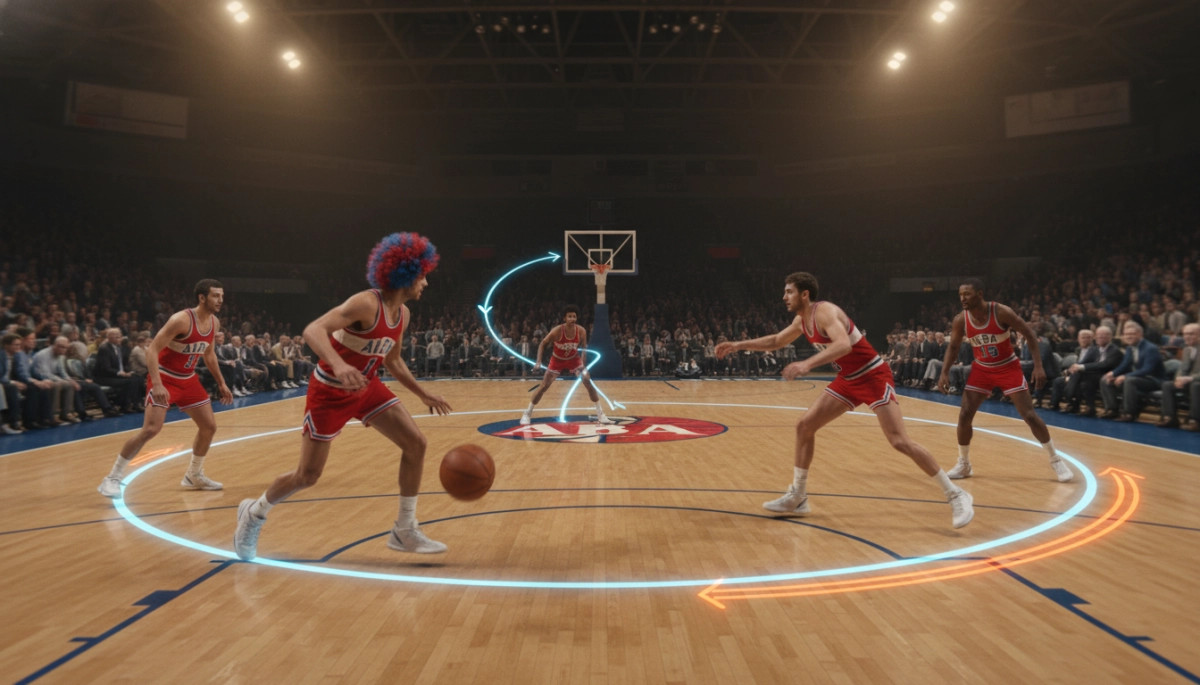
How ABA Quick Offense Fits Your Game
You’re looking to run an offense that moves quickly, keeps defenders uncomfortable, and generates open looks before rotations settle. The ABA-style approach—rooted in motion, strategic cuts, and fast-hitting set plays—lets you exploit space, pace, and mismatches. In this section you’ll get the foundational concepts that make the system effective and the immediate decisions players must make on the floor.
Why motion and quick sets matter
Motion offense is designed to be read-and-react rather than rigid. When you blend motion with quick-hitting sets, you keep the defense honest and allow your best creators to operate early in the shot clock. The goals are simple:
- Create high-percentage shots within the first 10–14 seconds of the possession.
- Force defensive communication and mismatches through continuous movement.
- Allow individual reads within a team framework so players can attack what the defense gives.
Core Principles of Motion Offense You Can Implement
Motion isn’t improvisation—you’ll implement specific rules so spacing and timing remain consistent. As you coach or play, emphasize these core principles:
- Spacing: Maintain about 12–18 feet between players to open driving lanes and allow cutters to receive passes without traffic.
- Replace and Balance: Whenever a player vacates a spot to cut or screen, a teammate fills that slot to preserve the floor balance.
- Continuous Movement: Cuts and screens should occur on every pass; standing still turns motion into confusion.
- Read First, React Second: Teach players three primary reads from each alignment (shoot, drive, pass to a cutter) so decisions are fast and decisive.
Drills you can use in practice: pass-and-cut 3-on-3, read-and-replace spacing drills, and rapid-fire 5-man entries to instill the tempo.
Fundamental Cuts and Read Options to Trigger Quick Looks
Knowing the right cut to make in each situation is what separates a functioning motion offense from a chaotic one. You’ll teach a handful of core cuts that are reliable and easy to recognize under pressure:
- Backdoor Cut: Use when the defender overplays the passing lane—quick rip and finish at the rim.
- V-Cut or L-Cut: Create separation for a perimeter catch-and-shoot opportunity.
- Baseline Curl: Run off a screen along the baseline for a mid-range or short corner shot.
- Downscreen Pop/Slip: Force defenders to choose: contest a pop perimeter shot or risk a slip to the rim.
Each cut pairs with a read: if the cut is denied, look to the screener’s roll/pop; if the defense helps, kick to the weak-side shooter. You’ll drill these reads so they become instinctual under game pressure.
With these principles and cuts drilled into your group, you’re ready to assemble quick-hitting sets that leverage motion to produce early advantages; next, you’ll see specific ABA quick sets and step-by-step entries that create immediate scoring opportunities.
Quick-Hit Set: Stack Entry into Backdoor/Pin-Down
This is a classic ABA quick-hitting look that forces decisions in the first 8–12 seconds. Use a stack alignment at the high post (two guards stacked, two wings on the elbows, big at the block) to disguise intent and get easy backdoor or pin-down opportunities.
- Alignment: Point guard (1) top, shooting guard (2) stacked behind, wings (3 & 4) at elbows, center (5) on the weak block.
- Step-by-step entry:
- 1 passes to 3 (elbow) and immediately cuts hard down the lane for a potential backdoor finish.
- If 1’s backdoor is denied, 2 pops out to the wing after clearing; 4 executes a pin-down for 1 or 2 depending on how the defense slides.
- The screener (5) briefly shows for a handoff or slips if the on-ball defender helps; if open, 5 rolls to the rim or pops to short corner.
- Primary reads: If the overplay yields a backdoor, hit it early. If the backdoor is taken away and the screener’s man helps, attack the roll or kick to the relocating wing for a catch-and-shoot.
- Counters: If the defense denies the pin-down aggressively, reverse the ball to the weak-side wing for a flare or quick baseline curl into space.
- Why it works: The stacked look hides intent and forces defenders to choose between stopping the backdoor or preparing for the pin-down — making one of those choices consistently wrong.
Quick-Hit Action: Dribble Handoff into Multiple Screen (DHO → Screen Away)
This play exploits aggressive on-ball defenders and teams that over-help at the rim. It’s ideal for teams with a ball-handler who can finish or create immediately off the DHO and shooters who space the floor.
- Alignment: Standard spacing with shooters in the corners and a big at the high post.
- Step-by-step entry:
- 1 dribbles toward 2 and executes a crisp dribble handoff; 2 reads the on-ball defender (switch/hedge/overplay).
- As 2 receives, 5 sets an off-ball stagger or flare screen for 3 on the weak side — this creates scramble and open shooters.
- If the DHO defender helps/hedges, 2 attacks the gap; if the defense switches, look for mismatches and slip the big to the rim.
- Primary reads: Attack the DHO gap first. If the ball-handler is taken away, reverse to the screened wing for a catch-and-shoot or backcut if the defender overplays the screen.
- Variations: Run the same sequence with a dribble handoff to your big for a post-entry, or set a downscreen for the ball-handler to curl after the DHO.
- Coaching points: The handoff must be tight and timed so the off-ball screen arrives as the defense is reacting. Encourage the ball-handler to sell the drive and the screener to either set a solid screen or attack the rim on the slip.
Practice Progressions to Install These Sets
Install both sets in three fast progressions to build comfort and decision-making under time pressure:
- Walk-through — Start without defense; emphasize timing, spacing, and the sequence of cuts/screens.
- Live reads — Add passive defenders who give standard reactions (overplay/hedge) so players practice reads without full contact.
- Controlled scrimmage — Run the sets under full defense with a short shot-clock (10–14 seconds) to simulate game tempo and force quick decisions.
Repeat these progressions twice weekly until reads are instinctual; emphasize the “read first, react second” mantra so the offense remains fluid even under pressure.
Putting the Playbook into Action
Now that the sets, cuts, and progressions are installed, the next step is consistent, deliberate application. Use game reps to reward quick decisions, not perfect execution; the goal is to force defensive choices and capitalize on the first correct read. Build confidence by emphasizing high-percentage actions and by measuring results—how many looks come before the 14-second mark and how often those early looks are contested?
In-game adjustments to prioritize
- Against aggressive on-ball defenses: lean into the DHO sequences and stagger screens to create downhill opportunities and slips.
- When opponents switch everything: hunt mismatches by running pin-downs and slips that target the weakest switch.
- If the defense sags off shooters: use baseline curls and V-cuts to free up catch-and-shoot opportunities quickly.
- Late clock or endgame: simplify reads—prioritize the highest-percentage option (drive to finish, quick post-entry, or open corner three) and avoid low-percentage improvisation.
Weekly installation checklist
- 2 full practice reps of walk-through timing for each quick set.
- 3–4 controlled live reps focusing only on reads and spacing (10–14 second shot clock).
- Regular 5-on-5 scrimmage segments where the first 10 seconds must come from an installed quick set.
- Film sessions that highlight correct reads and show missed opportunities—use small clips to teach one concept per meeting.
Coaching reminders
- Teach reads as rules, not suggestions—players should know the primary, secondary, and tertiary options from every alignment.
- Prioritize spacing over fancy action; good spacing makes everything else simpler and more effective.
- Encourage aggression on the first read—early advantage often wins games in ABA-style fast offenses.
- Continue to supplement reps with targeted drills—resources like motion offense drills can accelerate player comfort with reads and timing.
Take these sets to practice, keep the rules simple, and measure progress by the quality of early possessions. When motion, cuts, and quick-hitting sets are taught as clear options rather than vague ideas, your team will consistently create the uncomfortable situations you want the defense to face. Build the muscle memory, trust the reads, and let the pace become one of your biggest advantages on game night.