How ABA defensive drills create a foundation for team communication
To stop modern offenses, you need more than individual effort—you need coordinated team defense. ABA defensive strategy drills prioritize communication and rotation timing so you and your teammates react as a unit. When players speak, rotate, and cover at the same speed, you reduce open looks, force contested shots, and create transition opportunities.
This section explains why communication is non-negotiable and how targeted drills train both voice and movement. You’ll see drills that emphasize calling screens, switching, and helping without sacrificing your attachment to an opponent. The goal of these early exercises is to make clear, loud, and timely communication second nature under game-like stress.
Drills that train your voice, visual cues, and rotation mechanics
Below are practical ABA drills you can run at practice to build reliable communication and crisp rotations. Each drill focuses on a specific habit: calling the ball, recognizing when to help, and executing the correct rotation path. Run them in short, repeatable sets and add competitive pressure as players improve.
Shell Drill with vocal cues
Purpose: Reinforce defensive spacing, ball pressure, and consistent verbal cues (e.g., “ball”, “screen”, “help”).
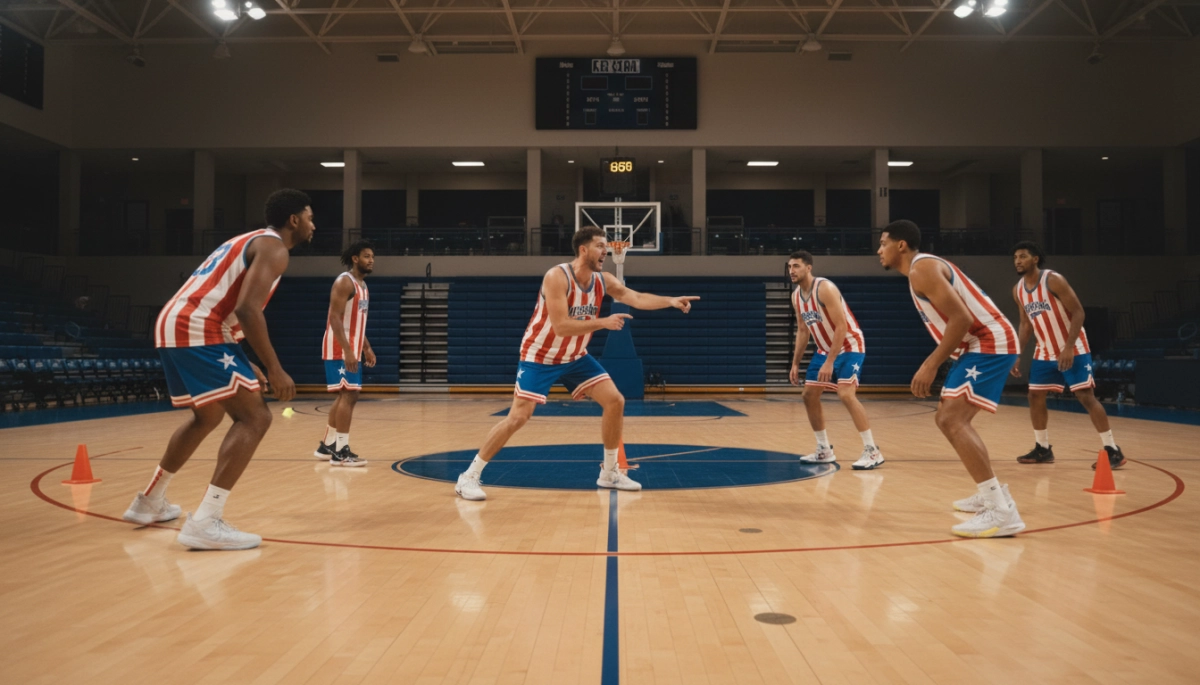
- Setup: 4 offensive players, 4 defenders in a half-court shell.
- Execution: Start with live ball movement. Defenders must call out the ball handler, screen, and help line every time the ball moves.
- Coaching focus: Encourage single-word calls and immediate rotation. Pause after breakdowns to correct positioning and phrase selection.
- Progression: Add a fifth offensive player or a dribble-penetrator to force real-time help decisions.
Rotational Closeout Circuit
Purpose: Improve your closeout technique and teach proper rotation lanes from help to recovery.
- Setup: Place cones at help positions (wing, high post, baseline). Defenders start in help positions with one offensive shooter at each cone.
- Execution: Coach touches the ball at a cone; the closest defender closes out, while the next defenders rotate to cover vacated spaces. Emphasize short, controlled closeouts then sprint-recover to your man.
- Coaching focus: Track footwork and the timing of the rotation—no slow, late slides. Verbal cues like “I got ball” and “I’m help” should accompany movement.
- Progression: Add a live offensive player who can shoot or drive, forcing defenders to make split-second decisions between contesting and stopping penetration.
With consistent repetition these drills will make your rotations automatic and your communication audible under pressure. In the next section, you’ll learn progressions, defensive spacing principles, and coaching cues to turn these practice drills into reliable game habits.
Progressions that bridge drills to game speed
Drills must evolve from isolated mechanics to decision-making under pressure. Use deliberate progressions that increase complexity and stress in small increments so players retain technique while learning to react faster. Progressions should be clear, measurable, and repeatable so coaches can scale them across practice weeks.
- Stationary to semi-live: Start with shell and closeout reps without a live dribbler. Add a single live penetration threat (coach or designated player) to force help reads. Then let the offense move freely while the defense maintains calls and rotations.
- Controlled live: Run 4-on-4 live possessions but limit offensive resets—no more than two passes before a shot—to encourage quick rotations. Use a 10–14 second shot clock to simulate game tempo and pressure communication with a tempo constraint.
- Chaos integration: Introduce a rotating fifth offensive player or unpredictable actions (backdoor cuts, quick screens) so defenders must process visual cues and verbal calls together. Reward the defense for forced turnovers, contested threes, and clean rotations; reset quickly and run another rep to build endurance of habits.
- Full live with live scoring: End progressions with 5-on-5 scrimmage segments where offensive success equals points and defensive stops are tracked. Require defenders to call out specific cues (e.g., “screen!”, “I’m switching!”, “help baseline”) to earn defensive points—this incentivizes communication under fatigue.
Each progression should be repeated in short bursts (30–90 seconds) with coaching pauses for corrections. Keep reps high but focused; the goal is to turn correct responses into immediate, automatic reactions during chaotic game moments.
Defensive spacing principles and coaching cues to lock rotations in
Consistent spacing and clear role language remove ambiguity from rotations. Teach a common vocabulary and map rotation lanes for each defensive position so every player knows where to go before the ball moves.
- Anchor points: Assign sight-line anchors for each rotation—e.g., “paint side elbow” for baseline help, “21-foot line” for wing recovery—so players rotate to established spots rather than guessing. Anchor points speed decisions and reduce late slides.
- Simple language: Keep calls one or two words—“ball”, “screen”, “I’ve help”, “you got”, “switch”—and standardize who calls what. Example: nearest defender calls “ball”, on-screen defender calls “screen”, helper calls “help” as they step in, and man-to-man reassignment is finished with “you got” to the recovering teammate.
- Rotation lanes: Teach defenders to rotate through weak-side pockets rather than across the paint when possible. This creates layers of defense—first line contests, second line discourage penetration, third line cleans up—without collapsing prematurely.
- Fixes for common breakdowns: If defenders are late, shorten the rotation (prioritize closeout over full recovery). If shooters are consistently open, emphasize earlier “ball” calls and quicker help stances. If over-helping leads to offensive cuts, coach defensive feet and chest orientation to maintain attachment.
Frequent, consistent cues paired with mapped rotation paths build muscle memory. Drill the anchor points and language until players stop debating roles and start executing them immediately—this is where communication becomes a competitive advantage rather than a classroom exercise.
Integrating drills into practice plans and measuring improvement
Make rotations and communication the heartbeat of your practice plan, not an afterthought. Schedule short, intense blocks focused on progression (e.g., 15–20 minutes of shell/progression work, 10 minutes of chaos reps, 10 minutes of live scoring). Use simple metrics to show progress and motivate players:
- Contested-shot percentage (per drill block)
- Defensive stops per 10 possessions during live segments
- Number of audible calls per possession (coach counts during scrimmage)
- Closeout time and distance (coach times and notes footwork)
Track these metrics weekly and give transparent feedback. Celebrate small wins—an extra call per possession, faster rotations, fewer breakdowns—and use video of practice reps to reinforce correct behavior. Over time, these measurable improvements turn practice drills into reliable, game-ready defensive habits.
Bringing communication and rotations to life
Build a culture where voice, trust, and decisive movement are expected—not optional. The drills and progressions above are tools; the real work is establishing habits through repetition, clear leadership, and measured feedback. When players know their lanes, their cues, and their teammates expect them to speak up, the defense becomes resilient under pressure and adaptable to any opponent.
Next steps for coaches and players
- Pick one drill from practice this week and require coaches to count audible calls per rep—small, measurable goals stick.
- Assign a defensive leader each session to enforce language and anchor-point discipline; rotate the role so responsibility spreads across the roster.
- Use video review and the metrics you track to reinforce moments of success and to correct late rotations quickly; for more drill resources and coaching ideas, see USA Basketball defensive principles.
Keep sessions short, focused, and relentless: over time the communication becomes automatic, rotations become instinctive, and your team defense turns into a consistent competitive advantage.