
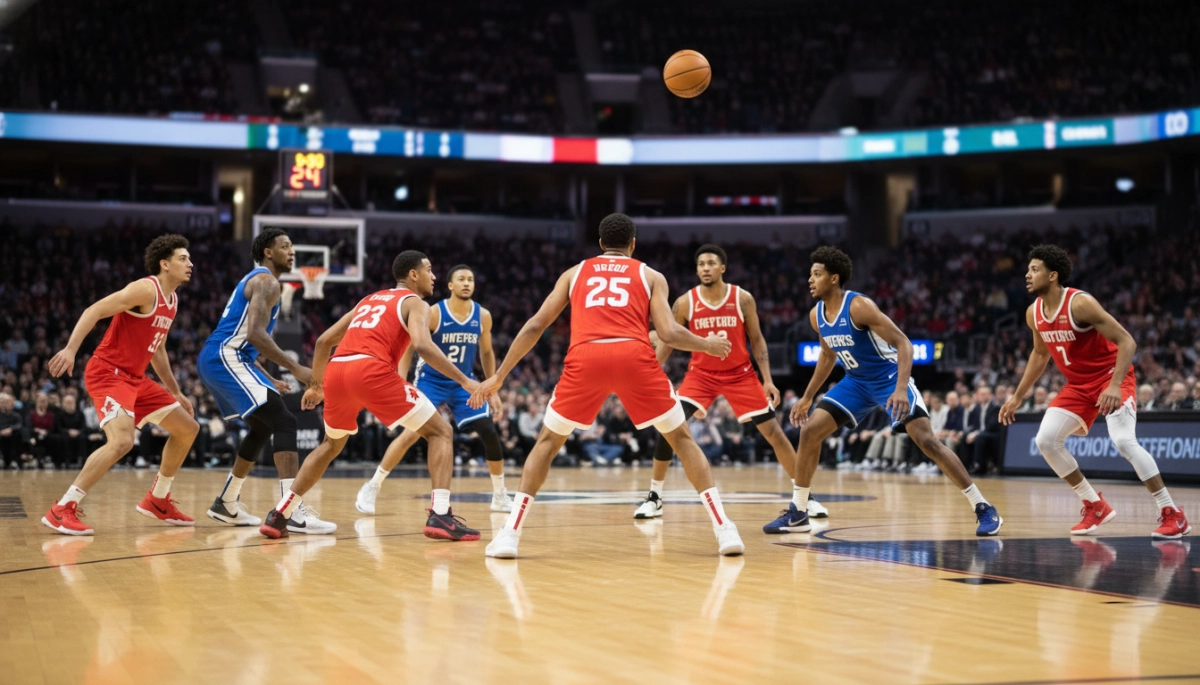
How spacing creates the lanes and options elite teams rely on
You need to understand spacing as the foundation of everything a modern offense does. Spacing is not just about keeping players apart; it’s about shaping defensive responsibilities and forcing help to travel longer distances. When you occupy the corners, wings, and high post with purpose, you turn one-on-one defense into team defense and generate easier reads for ball-handlers and cutters.
Think in terms of three zones: paint, short corner/high post, and perimeter. Each zone carries a defensive cost when occupied by a threat:
- Paint occupancy: A cutter or big who can finish or roll forces help-side rotations and opens perimeter shots.
- Short corner/high post: Occupying this area stretches help out of laddered positions and creates pocket passes into the lane.
- Perimeter spacing: Shooters on the wing and corner stretch the rim and punish overplays.
Practical cues you can apply immediately: keep corners attached to the baseline when the ball is on the wing; stagger your spacing so the nearest weak-side player is a legitimate shooting threat; and avoid clustering two non-shooters on the same side. Small changes in alignment — moving a shooter one step toward the corner or placing a ball-screen 2–3 feet wider — produce disproportionate benefits because they change angles of help and passing lanes.
Measuring the impact of spacing in decision-making
You should learn to read how defenders react to spacing: do they drop to deter drives, or do they stay attached to shooters? That initial reaction is the trigger for your offense. If the defense sags, the high-post or short corner becomes a seam you can exploit; if defenders attach, you get downhill driving and collapse opportunities. Good spacing amplifies simple actions like handoffs, isolation reads, and pick-and-roll by turning them into multi-threat sequences.
Using motion and read-and-react principles to force defensive mistakes
Motion is the engine that keeps spacing honest. You want continuous, purposeful movement—screens, curls, flare cuts—that forces defenders to make choices. When you run motion that complements spacing, you convert defensive hesitation into concrete advantages: late closeouts, miscommunication, and blown assignments.
- Screening with intent: stagger and pin-down screens that move defenders across the lane create mismatches and free rolling angles.
- Off-ball triggers: use dribble-handles, weak-side screens, or catch-and-go reads to make defenders reveal whether they prioritize the ball or their man.
- Priority reads: establish who is responsible for the ball, the paint, and the nearest shooter so that your read-and-react sequence has clear options.
Read-and-react offenses succeed because they reduce decision load: you follow a hierarchy (ball pressure → paint closed/ open → shooter availability) and execute the highest-percentage action. Early on, practice the primary reads—drive and finish, drive and dump to the short corner/high post, or kick to the corner catch for a catch-and-shoot. These sequences let you exploit defensive choices rather than forcing speculative solo plays.
Next, you’ll dive into specific actions and player alignments—pick-and-roll nuances, staggered-screen sets, and how to train the reads that make this system consistently productive.
Pick-and-roll nuances that expand read-and-react options
The pick-and-roll is a function, not a single play. Treat it as a branching decision tree: each defender’s reaction creates three primary outcomes you must plan for—drop/contain, hard hedge/show, or switch. Your spacing and movement around the action determine which branch you want to force and how you capitalize on it.
Practical permutations to master:
- Spread PNR: place shooters in the corners and weak-side wing so the defense must commit help from further away. This turns a standard roll into a downhill read or a simple kick-out for a corner triple.
- Staggered-roll vs. pop: train your big to sell a reset before committing to the rim. A delayed roll (staggered-roll) attacks counters to hard hedges; a hard pop is ideal against drop coverages or when the screener has reliable shooting range.
- Handoff continuity: after the initial screen, incorporate short dribble handoffs or slip-screens to punish over-aggression. Slip the screen against preemptive hedges; re-screen when the defense hard-switches.
Read cues for the ball-handler: if the screener’s defender steps up (show/hedge), attack the roll or look to the weak-side drop zone; if the defender sinks to cut off penetration (drop), hit the popper or short corner; if the defense switches, isolate the favorable match or use immediate dribble-handoff to create space. The on-ball decision is always supported by where your off-ball threats are positioned—maintain the three-zone occupancy described earlier so the PNR becomes a two-way threat rather than a one-trick play.
Staggered-screen sets and flare/curl mechanics that force help-syndromes
Staggered screens and flare/curl combos are the precision tools that force help rotations at the wrong time. Use staggered pin-downs to move defenders laterally across the lane, and design flare/curl reads so the cutter either catches rhythm shots or collapses the rim for the nearest driver.
Details to coach:
- Screen timing: first screener sets firm contact, second screener times release to create separation. This two-step action magnifies the defensive footwork required and increases the chance of miscommunication.
- Flare vs. curl reads: flare when the defender is overplaying the lane or you want a sideline baseline shot; curl when the defender gives cushion or when the rim is unprotected because help is late.
- Pin-down to roll: after the pin-down, allow the screener a lane to slip to the rim if the defender flies out. This is especially effective against teams that trap early on catch-and-shoot threats.
Small mechanical cues — three-quarter speed curls on early closeouts, shoulder-to-shoulder contact on pin-downs, and shot-ready hands on flares — raise execution percentage and force the defense into rushed rotations instead of composed help sequences.
Practice progressions to ingrain reads and speed up decision-making
Execution under live pressure separates theory from impact. Structure practice rep progressions to stress the read hierarchy rather than rote movement: start with half-court walk-throughs, progress to controlled 5-on-5 with limited options, then full live sequences with score-based consequences.
Drill examples:
- PNR read ladder: set multiple pick-and-rolls per possession with pre-assigned coverages shown by the coach; reward correct reads (drive, pass to screener, or kick) with immediate transition offense reps.
- Stagger-to-flare live reps: offense runs staggered pin-down into flare/curl against live defense for 10 reps each side; enforce corrections on spacing and timing between reps.
- Shell with constraint: 4-on-4 shell where one offensive player must be a corner shooter and cannot leave the corner—forces ball-handlers to work reads and improves kick-out recognition.
Measure success by decision quality, not just points: track turnovers on reads, forced shots, and kick-out frequency. Repeat these progressions into muscle memory so, in games, spacing plus motion becomes a predictable engine for high-percentage outcomes rather than a series of improvised gambles.
In-game adjustments and feedback loops
Even the best-designed offensive frameworks need constant in-game calibration. Use timeouts and short stoppages to address recurring coverages or to reinforce a particular read you want to force. Encourage players to call out specific defensive reactions—drops, hedges, or switches—so teammates can execute predetermined counters without hesitation.
Leverage simple data and video feedback between quarters: track which reads led to high-percentage looks, which rotations produced late closeouts, and which alignments consistently created mismatches. External scouting and public tracking tools like NBA Stats can help you identify opponent tendencies quickly and inform small, targeted adjustments at halftime.
Putting the system into play
The difference between an idea and a repeatable advantage is cultural ownership. Make the system a living process—one where players are rewarded for disciplined reads, coaches prioritize clarity over complexity, and mistakes are treated as data for the next practice rather than moments of blame. This mindset accelerates the feedback loop and turns principled execution into habit.
Practical next steps for teams
- Pick one offensive read or spacing alignment to focus on for a two-week cycle; measure outcomes (turnovers, assisted buckets, open threes).
- Build a practice micro-plan: warm-up reps → isolated read drills → live competitive sequences → film review within the same session.
- Assign in-game communication roles (lead caller, mismatch spotter, rotation reminder) so responsibilities are clear when the pace increases.
Execution is iterative. Keep drills specific, feedback immediate, and expectations consistent. Over time, the accumulation of small, disciplined choices will create the separation, timing, and clarity that make spacing, motion, and read-and-react a durable offensive identity rather than an occasional strategy.