
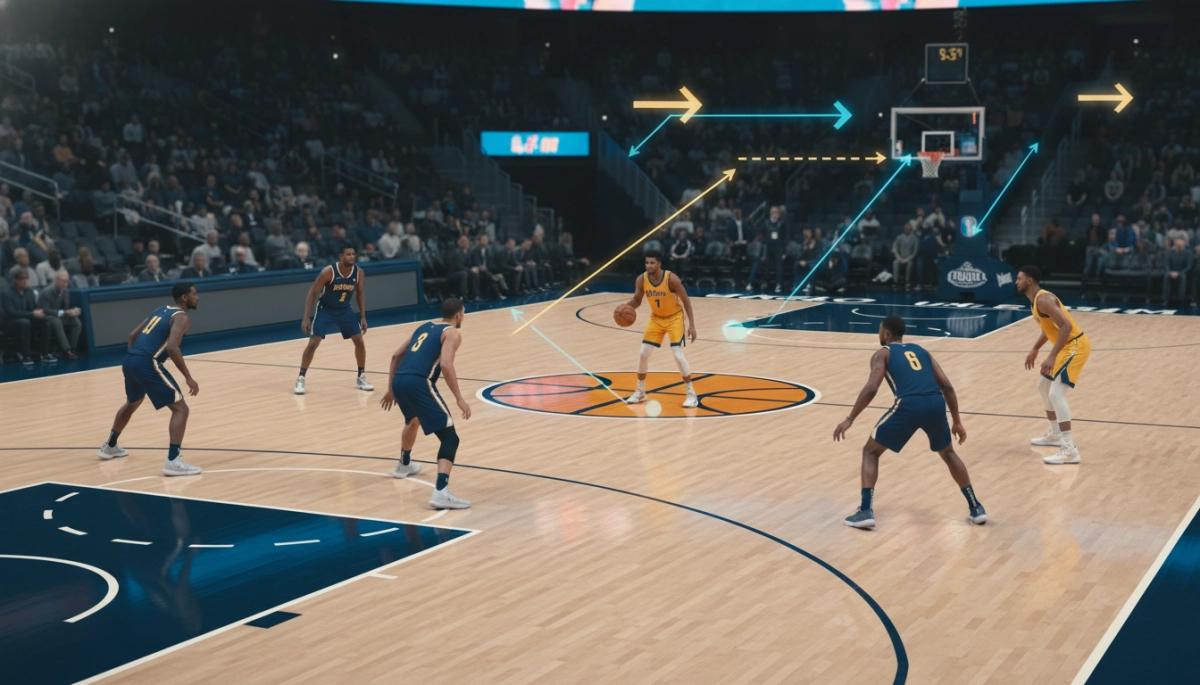
Why isolation plays remain a core weapon and when you should expect them
You already know the NBA is a game of reads and leverage. Isolation plays (ISOs) are not just hero-ball — they’re a strategic tool you use when matchups, clock, and personnel align. In this section you’ll learn the purpose behind ISOs: forcing one-on-one advantages, exploiting mismatches, and creating late-clock options when set actions have failed. Understanding the “why” helps you judge whether an ISO is a smart call or a ticky-tack stat-chase.
Teams turn to isolation for several practical reasons: the ball-handler’s superior creation ability, a defensive switch that left a poor defender on a scorer, or simply to use the clock late in the shot clock. You should also consider the trade-offs: isolations reduce ball movement, can clog offensive rebounding, and put pressure on the scorer to finish or draw fouls. When you evaluate an ISO, think about the next three elements: the type of isolation called, the spacing around the ball, and the personnel tasked to capitalize.
Core isolation play types and what each asks of the offense
- ISO: Wing/Perimeter — You clear the ball to a wing with space. This relies on a dribble penetration threat, step-back creation, or midrange accuracy. The weak side must provide catch-and-shoot spacing or vertical spacing to prevent help.
- Post Isolation — A bigger scorer receives the ball near the block. You aim to seal, turn the defender, or force doubles that kick out to shooters. This is effective when the defender is slower or the offense has shooting around the arc.
- Pick-and-ISO — A high screen is set to initiate a switch or gain separation for the ball-handler. After the screen, you isolate into a preferred hand or side rather than running a full pick-and-roll read.
- Dribble-Handoff (DHO) to ISO — A handoff creates an advantage and then the new ball-handler isolates. This hybrid is useful for disguising intentions and forcing awkward defensive rotations.
Spacing fundamentals that make isolations high-percentage
You can’t talk about ISOs without discussing spacing. For an isolation to create a high-percentage look, you need: proper lateral spacing, shooters positioned to punish help, and a rim presence to deter collapsing defenses. You should aim for 45–50 feet of effective floor spacing (two shooters and one weak-side rim threat), which gives the ball-handler room to attack while keeping passing options alive.
- Place a reliable three-point shooter opposite the ISO to discourage help rotations.
- Keep one player near the rim to occupy the shot-blocker or finish offensive rebounds.
- Avoid clustering players on the same side; that reduces driving lanes and invite double teams.
These fundamentals set the stage for the specific high-percentage sets coaches use to maximize isolation efficiency; in the next section you’ll see detailed set designs, player alignments, and analytics that show which ISOs produce the best outcomes and why.
High-percentage isolation sets coaches actually call
Coaches don’t leave ISOs to ad-lib alone — they script looks that optimize spacing, leverage the scorer’s strengths, and create easy reads. Here are four repeatable sets you’ll see at the NBA level and why each raises the odds of a positive outcome.
– Horns Clear-Through ISO — Two bigs start at the elbows (horns) and then clear to the weak side while the ball-handler receives a flare or slip from a screener. This gives the ball-handler a two-step advantage: a high-screen pinch followed by wide isolation space. Use this when the handler excels attacking the closeout or running a favored dribble move to the midrange.
– Wing Box Isolation — Two players occupy the corners, one posts up weak-side, and the fourth positions at the rim. This creates 45–50 feet of horizontal spacing while keeping an interior deterrent. It’s a go-to when you want driving lanes without inviting immediate hedge or blitz help.
– Stagger-to-ISO for Creators — A pair of stagger screens on the wing frees the dribbler into a clean one-on-one off the catch. The stagger disrupts help timing and can force a switching defense into awkward matchups. Ideal when the scorer prefers attacking from a standstill or needs a toe-in-the-water moment to read help.
– DHO/Screen-the-Screener Hybrid — Start with a dribble handoff that reads like a pick-and-roll; if the defense sags, the screener slips into the lane and the new ball-handler isolates on the short roll or step-back. This is valuable against aggressive hedging defenses because it mixes vertical and lateral spacing at the same time.
The common thread: each set gives the primary scorer a predictable, clean starting point — either a wide lane, a favorable footplant, or a forced switch. That predictability reduces negative outcomes (turnovers, low-percentage contested runners) and improves foul-drawing opportunities.
Personnel and matchup playbook: who should isolate (and who shouldn’t)
Not every talented scorer should be your isolation option. The ideal ISO candidate combines three attributes: finishing at the rim, reliable creation off the dribble, and either a consistent pull-up or a gravity-inducing shot. If a player lacks two of those, their isolation will usually underperform team actions.
Guidelines:
– Elite creators (top quintile in isolation PPP or on-ball assist rate) should get priority late in the clock.
– Bigs who can finish through contact or punish mismatches (post-ups with high-turnover draws) are worth isolating against smaller, slower defenders.
– Weak ISO candidates: high-usage specialists who are inefficient in isolation (too many step-backs, low rim attempts) — they’re better used as spacing or secondary cutters.
Quick shot-value math: team ball often generates ~1.00–1.10 points per possession, while raw isolations trend lower. If an ISO player can raise his expected outcome by drawing a foul (higher free-throw rate) or converting at the rim at >60%, his isolation can reach or exceed team-ball value. Use these thresholds when deciding to call an ISO in-game.
Reading defenses and in-game adjustments to keep ISOs efficient
Execution isn’t static — defenses adapt. Read three defensive reactions and adjust accordingly:
– Help-heavy collapse: Kick to the corner. If the defense collapses, you must have corner shooters ready to punish. If the corner is not available, feed the roll man or use a secondary dribble to reset spacing.
– Throwing doubles: Attack the catch-and-pass. If doubles are frequent, train the scorer to recognize the trap and pass to the free shooter on the weak side or the slip cutter. This turns opponent aggressiveness into kick-out points.
– Switching lines: Attack mismatches. When opponents switch screens to avoid help, isolate the mismatch — either the guard on a big or the big on a smaller defender. Use counters like a quick spin or step-back to force the less comfortable defender into making a play.
Successful ISO offense blends pre-set spacing, the correct personnel, and rapid reads to defensive counters. When those pieces align, isolations stop being a last resort and start functioning as a high-percentage option within your offensive toolkit.
Putting isolation concepts into practice
Isolation sets become valuable when they’re rehearsed, measured, and embedded into your team’s decision framework rather than imposed ad hoc. The following practical steps help convert the concepts above into repeatable, high-percentage play-calls during real games.
Coach’s implementation checklist
- Script reps in practice that mirror game-clock and crowd noise—late shot-clock ISOs, early-game tone-setting ISOs, and trap-read drills.
- Pair every isolation candidate with two designated shooters and one rim-presence in drills to reinforce spacing habits.
- Run reads for the scorer: recognize collapses, bait doubles, and scan for corner kicks or quick interior slips.
- Install 2–3 counters (step-back, spin, euro) and a primary pass-out sequence so the scorer has predetermined options under pressure.
- Simulate defensive adjustments (heavy help, aggressive doubles, switching) and practice the exact responses you want in-game.
Measure, adapt, and keep it simple
- Track isolation PPP, free-throw rate, and finishing-at-rim percentage for each candidate; set clear thresholds for when to call ISOs in late-clock situations.
- Use film sessions to show successful reads and failed decisions; reinforce recognition over rote moves.
- Rotate plays based on personnel matchups and opponent tendencies—don’t force an ISO if analytics and the matchup both argue against it.
Isolation is a controllable variable: practice the reads, limit it to the right personnel and moments, and let data and film guide when to expand or restrict its use. For tracking the specific metrics that should influence those choices, consult league-wide resources like NBA Advanced Stats to see how individual players and teams perform in isolation situations and under different defensive looks.