
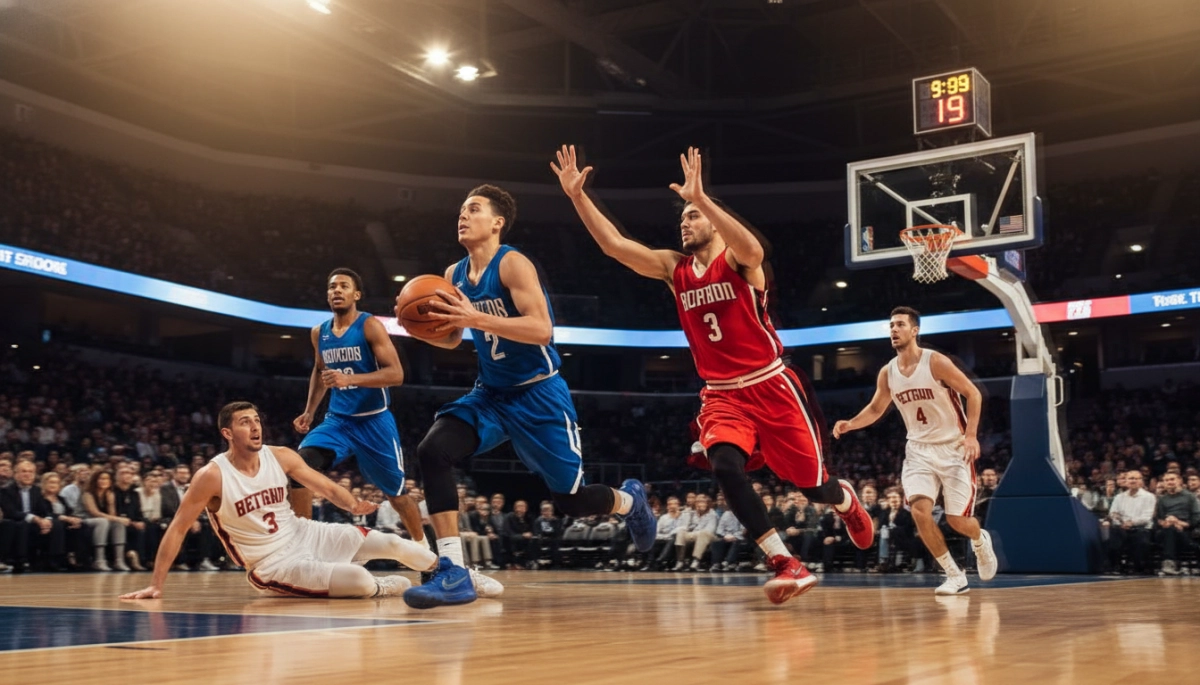
Turn defense into quick points: why transition offense wins games
You already know that possessions in transition are some of the highest-percentage scoring opportunities in basketball. When you push the ball immediately after a defensive rebound, stop, or steal, you force the defense to scramble and create mismatches, open lanes, and early shot chances. A well-coached transition offense shortens the shot clock in your favor, increases pace without sacrificing efficiency, and can demoralize opponents who struggle to recover defensively.
In this part, you’ll learn the foundational principles and early tactical choices that let you score in seconds. These basics are what you and your team must internalize before adding specific fast-break sets and drills.
Core principles and simple rules every player must follow
To make any fast-break set work consistently, you and your teammates must operate under clear, repeatable rules. These principles reduce hesitation, improve decision-making on the fly, and keep the break organized even when things get chaotic.
Prioritize the outlet and the first pass
- Immediate outlet: After a rebound or turnover, the first priority is finding the outlet pass to a guard or wing who can push. If you’re the rebounder, secure the ball and quickly locate your outlet—don’t dribble back toward defenders.
- Push the pace: When you receive the outlet, turn up the court with purpose. A one- or two-dribble push often beats a slower, safe advance because it arrives before the defense sets.
Spacing, lanes, and where to run
- Fill the lanes: Your wings sprint along the sidelines while a trailer or middle option runs the center lane. This triangle of lanes—two wings and one middle—creates natural passing angles and prevents defenders from covering everything at once.
- Stay wide when needed: If you’re on the wing, push wide enough to stretch the recovery defender. If you cut inside too early, you clog the lane and make the break easier to stop.
Player roles in early transition and simple read-react options
Assigning clear roles makes reads automatic. Whether you coach youth teams or play yourself, use these role definitions as starting points.
- Outlet passer: The rebounder’s first read is the nearest guard or wing. If that player is covered, find the trailer or a safety outlet near midcourt.
- Primary ball-handler: Once you get the ball, your first read should be the rim—look for a downhill lane. If the lane is closed, read the rim defender: kick to an open wing, hit the trailer, or pull up for a quick three if safe.
- Trailer/secondary: Your job is to provide a late option and crash for rebounds. If the primary attack collapses the defense, you may be wide open at the elbow or short corner.
With these rules and roles practiced, your team will reduce turnovers in transition and increase high-quality attempts. Next, you’ll explore specific fast-break sets, spacing diagrams, and drills that make these principles second nature on game day.
Two attacking fast-break sets you can install this week
Begin with two high-ROI sets that cover most transition situations: a primary 3-on-2/2-on-1 break for immediate rim attacks, and a structured 4-on-3 fast break for when you have numbers but the defense has a trailer. Both are simple to teach, easy to read, and scale from youth to advanced teams.
Set A — 3-on-2 / 2-on-1 downhill (the classic push)
- Alignment: Outlet (1) goes to a ball-screen or downhill guard (2); two wings (3 & 4) sprint wide; trailer (5) runs the middle.
- Sequence: The outlet pushes hard toward the rim. If two defenders pick up, the ball-handler reads the two defenders: attack the rim if a lane opens; if one defender commits, the ball-handler passes to the open wing for a layup or quick kick to the trailer for a short jumper.
- Rules: Wings must stay wide until the ball clears halfcourt; no early cuts that clog the middle. If the primary gets stopped, the trailer becomes the safety option—catch and finish or reset.
- Why it works: Forces the defense into immediate help decisions; creates easy split-the-defense reads and high-percentage inside finishes or backside three-pointers if help collapses.
Set B — 4-on-3 staggered (the delayed overload)
- Alignment: Two wings (3 & 4) sprint wide, ball-handler (1) pushes, trailer (5) fills the center, and the weak-side wing (2) trails just behind the new halfcourt line.
- Sequence: If defenders recover, run a quick stagger or slip by the trailing wing for a ball-screen action at the elbow. The initial goal is a rim attack; if help arrives, kick to the staggering wing or pull-up from the elbow.
- Rules: Maintain lane integrity—don’t bunch. The trailer must exploit the drop-off area (short corner/near elbow) as the safety read.
- Why it works: Creates an extra passing lane and a trailer mismatch; good against teams that get back with only three defenders and helps utilize traditional halfcourt sets as the break transitions.
Practice drills and coaching points to make them automatic
Install these drills in every practice so reads become reflexive. Emphasize speed, communication, and simple, repeatable mechanics.
- Outlet-to-push drill (4 minutes): Rebound, outlet, and sprint the full court. Coach times each rep; target is 6–8 seconds to a shot. Emphasize a one- or two-dribble push and decisive reads.
- Continuous 4-on-3 fast break drill (6–8 minutes): Start with 4 offense vs. 3 defense. After the play ends, the defense rebounds and becomes offense. This builds conditioning, decision-making, and recovery communication.
- 3-line decision drill (5 minutes): Outlet at baseline, wings at halfcourt, trailer at the top of the key. Coach calls scenarios—“middle closed,” “double,” “trailer late”—and players execute the appropriate read. Pause, correct, and repeat for muscle memory.
- Finish under contact (4 minutes): Teach finishing with body control: absorb contact, finish with the off-hand if necessary, or kick out to the trailer. Reinforce quick offensive rebounds from the trailer position.
Coaching points: demand loud communication (“OUTLET!”, “PUSH!”, “TRAIL!”), teach the outlet to lead the push with a chest-level pass, and reward quick shots that are high-percentage. With these sets and drills, your team will convert more turnovers and rebounds into fast, efficient offense.
Putting the break into practice
Turning a practiced fast-break into consistent game production is about repetition, measurable goals, and simple adjustments. Focus on small, daily habits—clean outlets, decisive pushes, and disciplined lane spacing—and give players clear in-game responsibilities so choices become automatic under pressure.
Game-day checklist
- Designate who outlets on defensive rebounds and who becomes the immediate trailer; make it a firm assignment.
- Run a brief pregame sprint of the outlet-to-push drill to reinforce tempo and timing.
- Establish two audible cues for the team: one to signal a fast aggressive push and one to pause the break and reset.
- Track transition attempts and conversion rate on the bench sheet—measure progress and emphasize quality over quantity.
4-week practice progression (sample)
- Week 1 — Fundamentals: daily outlet reps, lane sprints, and decision-only 3-on-2 drills to build reads.
- Week 2 — Controlled competition: add continuous 4-on-3 and 3-line decision drills; coach stoppages for teaching moments.
- Week 3 — Pressure and variability: finish-under-contact, live recovery work, and scrimmages emphasizing immediate pushes off turnovers.
- Week 4 — Game simulation: full-speed transition sets inside scrimmage with scoreboard constraints; review film and tweak rules to fit personnel.
Resources and continuing development
- Collect simple metrics each game (outlets made, transition shots, conversion %) and review weekly with players.
- Encourage players to watch short clips of elite transition play and identify one behavior to copy each week.
- For additional drill ideas and progressions, see the USA Basketball drill library.
Final notes and next steps
Make the break part of your team identity by practicing it with intention, measuring how often it produces high-quality attempts, and adjusting to the strengths of your roster. Stay patient—the most dangerous transition offenses are the ones that look effortless because the team has rehearsed the small, repeatable actions that lead to scoring in seconds. Keep coaching the details, reward smart aggression, and let the speed become a habit.