
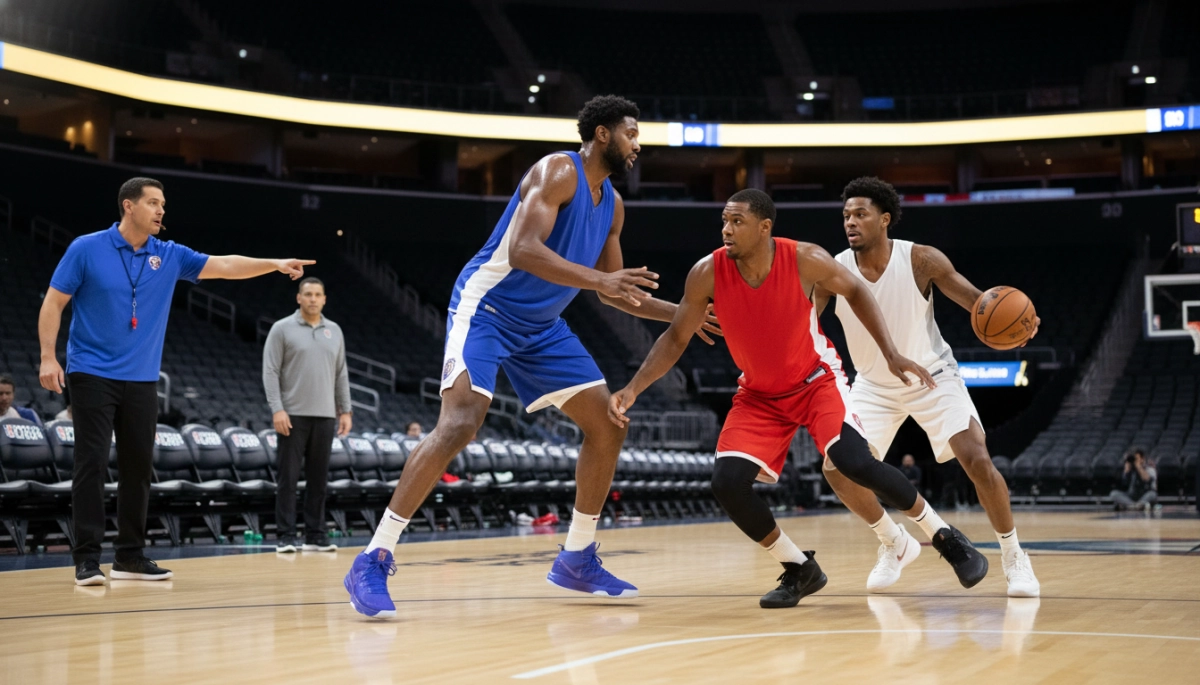
How the Pick-and-Roll Shapes Modern NBA Offense and What You Need to Emphasize
The pick-and-roll is the backbone of contemporary offense because it creates decisive advantages: mismatches, driving lanes, and spacing that open shots for role players. As a coach, you must teach the pick-and-roll not as a single play, but as a series of reads and reactions that both the ball‑handler and screener can execute instinctively. You’ll want to prioritize spacing, timing, and decision-making over set choreography so players can adapt during live reads.
Start by framing the pick-and-roll as a two-way conversation. The ball‑handler reads the defender’s positioning and hands; the screener reads help defenders and angles. Emphasize that success depends on a shared vocabulary—stagger, slip, pop, roll, delay—so your group makes coordinated choices under pressure.
Fundamental Principles to Teach Your Players First
Before practicing advanced counters, lock in these fundamentals that every player must perform reliably during the pick-and-roll:
- Spacing: Maintain consistent floor balance so corner shooters and weak-side cutters can be threats. If spacing collapses, the defense helps and the advantage vanishes.
- Angle of the Screen: Teach screeners to set with chest and hips squared to the defender’s path, avoiding moving screens while maximizing contact area.
- Timing and Pace: Encourage a controlled tempo—too slow loses the window, too fast creates sloppy decisions. The ball‑handler and screener should practice synchronization drills until the pick is fluid.
- Vision and Passing: The ball‑handler must scan to the roll man, pop man, short corner, and baseline cutter within one glance to exploit rotations.
- Screener Finishes: Rollers need to work on sealing, catching, and finishing through contact, plus quick decisions to pop or slip based on the defender’s leverage.
Drills that Build Reliable Mechanics
- Two‑man partner reps with live closeouts—focus on catch, read, and immediate split-second reaction (drive, pass, or pull-up).
- Screener footwork sequences: set, stagger, roll, and pop to improve conditioning and spatial awareness.
- 4-on-4 half‑court simulations emphasizing spacing and weak-side rotations to replicate game help defenders.
Simple Reads and Immediate Counters for the Ball‑Handler and Screener
You can teach a small set of reads that cover a large percentage of in-game situations. For the ball‑handler, the primary reads are: hedge/ice, show-and-recover, trap, and switch. For the screener: roll to rim when the opposing big sags, pop when the big switches out and you’re a shooter, and slip when the screener’s man over-commits to fight through.
- If the defense hedges: Attack the recovering defender’s vertical drop—use a quick split or a skip pass to the weak side.
- If the defense switches: Force mismatches by attacking the smaller defender off the bounce or having the screener pop to the elbow or three-point line.
- If the defense traps: Train the ball‑handler to recognize trap angles and make the rapid kick to the open shooter or back‑cut.
These foundational reads set the stage for more advanced counters and coverage recognition. In the next section you’ll learn how to diagnose specific defensive coverages (drop, blitz, ICE, switch) and the precise counters and teaching progressions to beat each look.
Diagnosing Defensive Coverages (Drop, Blitz, ICE, Switch) — What to See and the Exact Counters
Teach players to identify the look within two steps of the screen. Use visual checkpoints: the defender’s depth off the ball, the help defender’s body angle, and whether the screener’s man fights over, under, or away. Once identified, the response should be a practiced habit.
- Drop coverage: The big steps back to protect the rim, conceding space above the break. Counter: read the drop and attack the elbow/short‑roll area — don’t crash straight into the dropper. The screener should pop to the mid‑range area or short corner and be ready for a short roll catch-and-shoot. Teach the ball‑handler to use float dribbles toward the drop to create a precise pocket pass or a kick-out to the corner shooter.
- Blitz/trap (hard show then double): The on-ball defender and help defender aggressively squeeze the ball. Counter: practice a “trap-escape” sequence — ball‑handler first look is the roller’s seam cut (a quick slip or tunnel pass), second is the trailing shooter on the weak side. Emphasize one-touch kick passes and pre-rehearsed spacing to give the trap no recovery lane.
- ICE (pinch to sideline): The on-ball defender angles to force baseline, the screener’s defender discourages the roll. Counter: use re-screen actions and quick slips to the middle; throw a backdoor or handoff to exploit the over-commitment to the baseline. Another effective counter is a drag screen toward middle or a high ball-screen from the opposite side to reverse the pressure.
- Switch-heavy schemes: Look for mismatches. Counter: create separation with re-screens, stagger screens, or pick-and-pop options. If the switch creates a smaller defender on the ball-handler, attack off the bounce; if it creates a slower big on the ball-handler, use spread pick-and-rolls with rim attacks or quick lobs to the roller.
Teaching Progressions and Practice Templates to Make Counters Automatic
Structure practice so recognition and reaction become muscle memory. Use progressive constraints that replicate game speed and pressure.
- Phase 1 — Isolated reps without defense: Ball-handler and screener repeat reads (slip, pop, short roll) on cue. Focus on footwork, angle of screen, and timing of the decision. Add passive defenders after reps to force cleaner execution.
- Phase 2 — Patterned conditioning drills: 2-on-2 with one specific coverage per set (only drop, only trap, only ICE). Limit options at first — for example, prohibit shooting and force the intended counter — then gradually open choices.
- Phase 3 — Live 4-on-4 coverage work: Run sequences where offense is rewarded for proper reads (extra point for open three or roller basket). Rotate defenders so players see all coverages and learn to communicate cover calls: “drop,” “show,” “ice,” “switch.”
- Coaching cues and metrics: Use simple verbal cues — “slip now,” “pop left,” “kick corner” — and track measurable outputs: turnovers on pick-and-rolls, percentage of open threes created, and effective field goal percentage when facing each coverage. Review film with still frames highlighting the defensive look and the correct counter.
Game-Day Implementation and Scouting Checklist
Before tip
Identify the opponent’s pick-and-roll tendencies during warmups. Note which coverages they favor (drop, blitz, ICE, switch) and which defenders overcommit on show or recovery. Share a one-line plan with your ball‑handler and screener: the primary read, the two quick counters, and the weak-side spacing responsibility.
In-game adjustments
- Use timeouts and quick huddles to reinforce a single counter if the defense repeats a coverage.
- Track outcomes play-by-play: which counters generate points or turnovers, and which actions stagnate the offense.
- Substitute to exploit mismatch trends — bring in a pop threat if the defense consistently drops, or a cutter if they over-commit on show.
Final Coaching Reminders and Next Steps
Turn the pick-and-roll into a habit, not a script. Keep practices intentional: isolate the read, add pressure, and then simulate the chaos of game speed. Build a communication culture where simple, shared language reduces hesitation. Reward players for decisive choices more than for perfect execution in practice; decisiveness under pressure breeds cleaner reads in games.
Document what works and iterate weekly—use short film sessions to highlight one teachable moment from your last game. For additional drills, session plans, and coach-to-coach ideas, consult external coaching resources such as NBA coaching resources to expand your toolkit and stay current with evolving pick-and-roll strategies.