
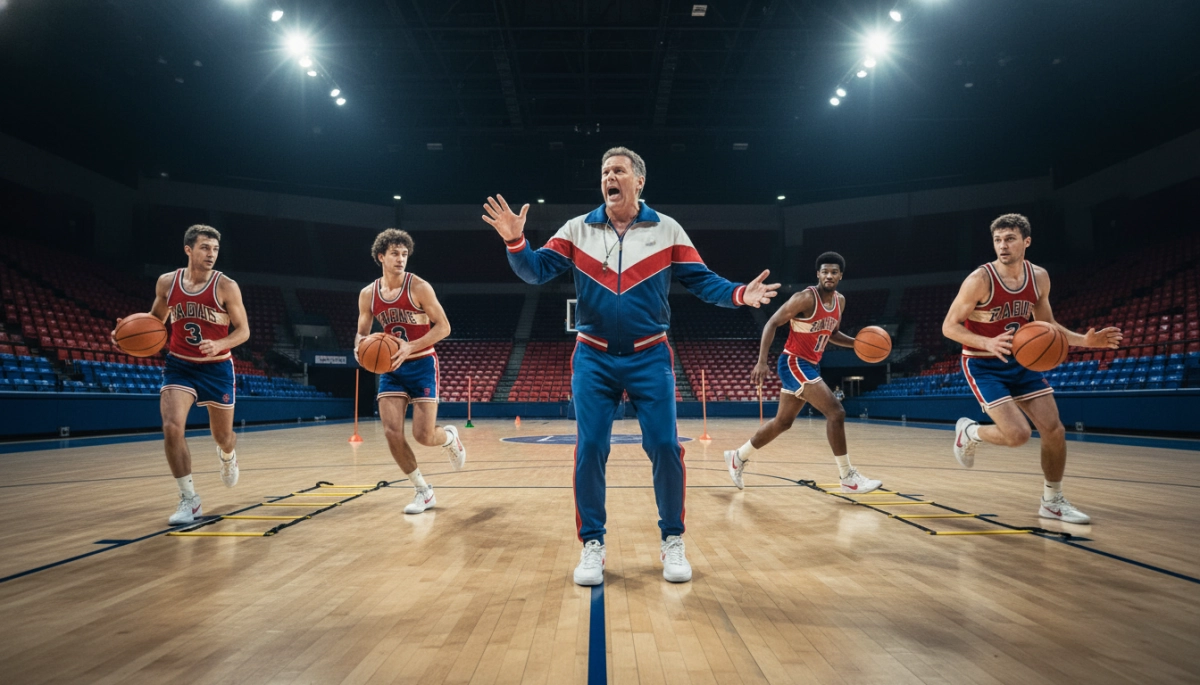
Why a High-Tempo Offense Gives You an Edge in the ABA
In the ABA, games are decided by possessions and momentum. If you want to tilt outcomes in your favor, you need a deliberate plan to increase pace without sacrificing efficiency. A high-tempo offense isn’t simply pushing the ball; it’s a system that converts defense into offense, exploits mismatches, and forces opponents into uncomfortable decisions. As a coach, you’ll shape habits, set clear decision rules, and design practices that make speed sustainable rather than chaotic.
Core principles that make tempo effective
Before you add sprints and quick reads, lock in the principles that prevent high tempo from becoming reckless. Focus on three interdependent elements:
- Possession value: Teach players to recognize when a quick shot is more valuable than a marginally better shot later. Not every outlet becomes a forced attempt—train them to prioritize high-value opportunities.
- Spacing and lanes: Proper spacing creates driving lanes and passing corridors for fast-break and early-offense actions. If spacing breaks down, tempo collapses into turnovers and contested shots.
- Decision rules: Establish simple, repeatable rules (e.g., “shoot if open within three seconds,” “dribble to draw help then kick”) so players make fast, consistent choices under pressure.
Building the physical and mental foundation
A team’s ability to sustain a high-pace scheme depends on conditioning, role clarity, and mental preparedness. You’ll need to prepare players physically and give them mental checklists to execute quickly.
- Conditioning with purpose: Use basketball-specific conditioning—sprint-recovery drills, transition simulations, and repeated 5-on-5 tempo sets—to build the energy systems required for sustained pace.
- Role-based expectations: Define each player’s job in transition: primary ball-handler, trailer cutter, weak-side spacing, rebound outlet. When roles are clear, younger or less experienced players can act quickly without overthinking.
- Reset and rebound rules: Implement quick rebound-to-outlet protocols and immediate spacing on offensive rebounds to convert defensive rebounds into early offense.
Practice structure that trains speed and clarity
Design practice segments that simulate game pressure and reward correct, speedy execution. Alternate high-intensity tempo reps with short coaching checkpoints so players internalize choices without losing rhythm.
- Start with controlled 3-man sprint options to teach outlets and first-read decisions.
- Progress to 5-on-5 with a shot clock constraint and incentives for scoring within a limited number of passes or seconds.
- Finish with competitive transition scrimmages where turnovers result in extra conditioning—this teaches urgency and accountability simultaneously.
These foundations prepare your roster to run intelligently at speed. In the next section, you’ll learn specific set actions, spacing diagrams, and in-game adjustments that convert these principles into possessions and points.
Fast-action sets to trigger early offense
To convert defensive rebounds and turnovers into high-percentage, early possessions you need a small library of repeatable actions that players can run instinctively. These sets aren’t complicated plays; they’re sequencing rules that create predictable spacing and force the defense to reveal itself.
– Primary break (3-second rule): Outlet to ball-handler pushes at once. Two wings sprint to the corners, trailer fills the elbow/slot, rim-runner cuts to the paint. If the defense retreats, ball-handler attacks the rim; if help comes, kick to the corner for a 3-second catch-and-shoot. This simple template prioritizes numbers and clear reads.
– Quick horns post-entry: Post up your best interior finisher on the short-side block immediately after the outlet. Two wings set stagger screens (one at elbow, one at low block) to free the post or create a dive lane. If the post gets fronted, the high-side wing pops for an early kick to a spot-up look.
– Drag-screen early pick-and-roll: Against mismatched or switchable defenses, initiate a drag screen on the ball-handler as soon as the first two dribbles start. The screener rolls hard to the rim while the weak-side corner spaces and the trailer clears to the top. The point’s read sequence: attack roll defender (finish), hit roller (dump), or kick to trailer (open jumper).
– Continuous 4-on-3 advantage: After offensive rebound or steal, create an overload by having one defender drop to cover baseline while your four offensive players attack. Use quick dribble penetration and one pass to a trailer or corner. The rule: finish within four passes or three seconds of the trailer receiving the ball.
Teach each action as a set of IF-THEN decision rules rather than Xs and Os. For example: “IF the rim is open on the first drive, go. IF help rotates from the weak side, kick to corner. IF the post is fronted, reverse to the top.” Repetition makes these reads automatic.
Spacing schemes and quick-strike reads
Spacing is the currency of tempo. Without reliable spacing, your early actions collide and possessions devolve into static chaos. Adopt two spacing templates and drill the reads that follow.
– Spread Template (pace primer): Two corners, two wings at 18–22 feet, rim-runner trailing at 3–4 steps. Purpose: create driving lanes and open corner threes. Reads: drive lane = finish; help = kick to corner; hedge/scramble = exploit roll or skip pass to opposite wing.
– Box/Slot Template (early-post emphasis): Ball on one wing, opposite wing at top, post short-side, trailer high slot, corner reset. Purpose: quick post entries and short-roll actions. Reads: post entry = go; if doubled, pass to trailer for 1-2 dribble handoff; deny = swing and attack weak-side skip.
Drill the reads with time constraints: “pass in 2 seconds, attack in 3,” and reward correct choices in scrimmage. Use court markings to teach exact distances (wings at elbow extended, corners hugging baseline) so spacing becomes a habit.
In-game adjustments and tempo management
Running fast doesn’t mean abandoning control. Tempo is a strategic dial you turn based on foul situations, opponent personnel, and momentum.
– Matchups and substitution patterns: Track which substitutions slow your team. Some bench units are better at running; others are half-court specialists. Plan substitution waves so your freshest, quickest players are on after defensive stops, not at the end of a long defensive stint.
– Managing fouls and late-game tempo: When you’re in foul trouble or the opponent aims to slow the game, shift to your quick-attack early offense—take clean threes or quick drives rather than extended sets that invite fouling. Conversely, if you need to kill clock with a lead, use your high-IQ handlers to run controlled 8–10 second possessions that still preserve spacing.
– Tactical timeouts and momentum resets: Use short timeouts to reset decision rules after a flurry of turnovers. Implement one-sentence reminders (“force to the weak side and kick”) so players return focused and play fast, not frantic.
These tactical choices—clear early actions, drilled spacing, and dynamic tempo management—turn the theory of high-paced offense into reliable, repeatable points on the scoreboard.
Putting the system into practice
Weekly checklist for coaches
- Allocate practice time: 25% dedicated to tempo-specific drills (outlet reads, 3-man sprint options, 5-on-5 shot-clock constraints).
- Track two core metrics each game: early-offense points per possession and turnovers on transition attempts.
- Rotation planning: map substitution waves so your best transition units follow defensive stops; rehearse those rotations in walk-throughs.
- Film focus: review three transition possessions per game with players—one successful, one neutral, one turnover—to reinforce decision rules.
- Progress checkpoints: conduct a conditioning and decision-read test every two weeks to measure stamina and reaction time under pressure.
Small experiments that scale
- Try a single-rule change for one week (e.g., “shoot if open within three seconds”) and measure its impact rather than overhauling everything at once.
- Test one new set (drag-screen early pick-and-roll or continuous 4-on-3) in two games; evaluate success rate and player comfort.
- Rotate a bench unit intentionally for two-minute bursts to see which personnel maintain pace without a drop in efficiency.
Implementing with intent
Speed without structure is noise—structure without speed is predictable. Your job is to create a learning environment where controlled speed is the default. Start small, measure what matters, and iterate weekly: keep the rules simple, reward correct fast decisions, and protect your spacing. Use film and data to reinforce good habits rather than punish mistakes. For benchmarking pace and possession-level data, reference public resources like Basketball-Reference to track trends and refine what you teach.
Run the process like a coach: test one idea, evaluate objectively, and only keep what raises value per possession. Over time the tempo you build will become a competitive identity—one that pressures opponents, creates higher-quality chances, and lets your team play to its strengths.