
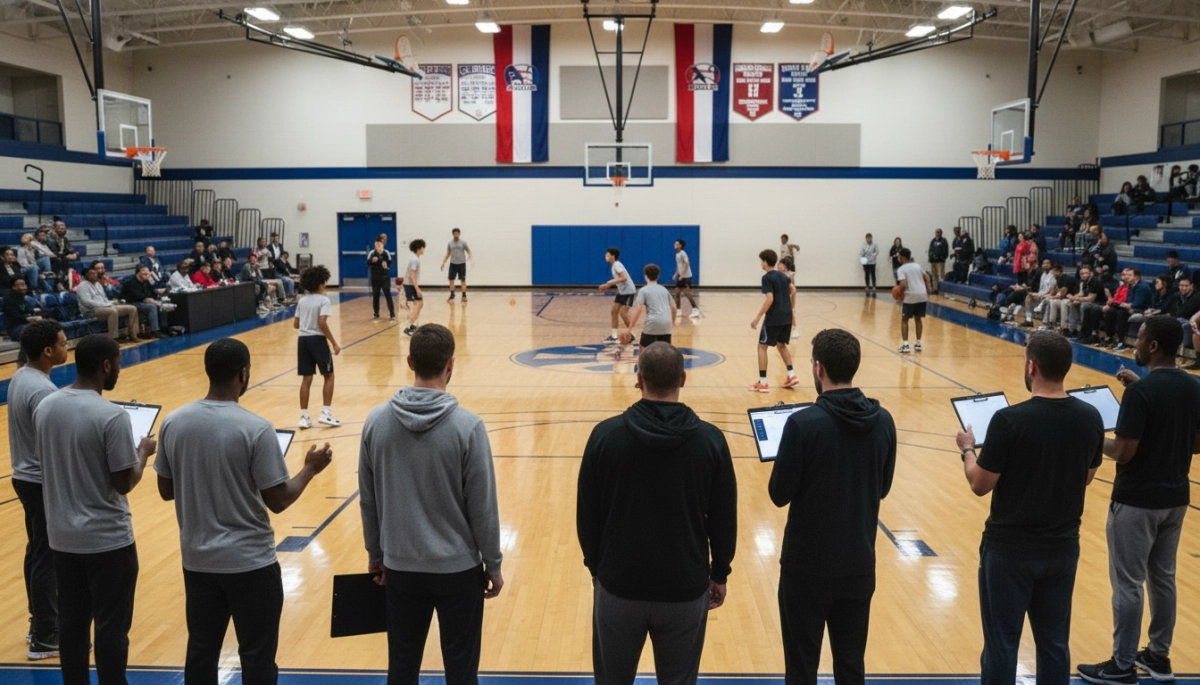
How modern ABA and NBA scouting shapes what you watch for in prospects
When you follow prospect boards, combines, or local pro-am games, you see that scouting in the ABA and NBA is no longer about simple box-score stats. Scouts fuse on-court film, physical measurables, analytics, and background work to project whether a player will thrive at the next level. You need to understand that scouts are trying to answer two questions for each prospect: what can this player do today, and how likely are they to improve or translate in a professional setting?
Scouting today emphasizes context. A high scoring average in college or overseas is useful only if you can relate it to level of competition, role, and team system. You should expect scouts to weigh a prospect’s production alongside the environment that produced it: pace of play, teammates, and shot selection. That context drives how scouts interpret measurables and skills when predicting success in ABA or NBA systems.
Physical measurables and athletic traits scouts prioritize
You’ll hear a lot about height, wingspan, and vertical jump because those measurable traits often determine a player’s positional ceiling and defensive potential. Modern scouts still start with the physical profile, but they combine it with movement testing to evaluate fit in today’s faster, switch-heavy game.
- Size and length: Height and wingspan inform defensive switching ability and shot-contesting range.
- Explosiveness and speed: Vertical leap, sprint times, and first-step quickness predict finishing and transition impact.
- Mobility and agility: Lateral quickness and change-of-direction ability are critical for perimeter defenders and versatile bigs.
- Durability/ease of movement: Scouts consider injury history and how a player’s body tolerates training load.
Skills, basketball IQ, and the modern emphasis on versatility
After you’ve examined measurables, the next focus is what a player can do with the ball and without it. Today’s ABA and NBA rosters prize multi-skilled, positionless players who can space the floor, create for others, and guard multiple positions. Scouts evaluate both raw skill and how a player uses those skills in live action.
- Shooting range and consistency: Reliable 3-point shooting or the potential to develop it is often a baseline requirement.
- Playmaking and decision-making: Scouting looks at passing vision, pick-and-roll reads, and how a player handles pressure.
- Defensive instincts: Anticipation, pursuit angles, and communication matter as much as pure lateral speed.
- Role adaptability: Can the player fill starter minutes, or are they a specialized rotation piece? Scouts project where you’ll fit on a roster.
With these foundational areas covered—contextual production, measurables, and core skills—scouts move into deeper evaluation layers such as film grading, advanced metrics, and background checks. In the next section, you’ll explore how scouts combine game film, analytics, and interviews to form a full-picture prospect grade and make roster decisions.
How scouts marry game film with advanced analytics
Scouts don’t treat film and analytics as separate verdicts — they’re complementary inputs. Film supplies context: how a prospect creates space, sequences moves, and reacts to live defensive schemes. Analytics quantify tendencies and outcomes at scale: shot profiles, pick-and-roll usage, defensive impact, and line-up-level plus/minus. Together they answer whether a player’s production is repeatable or a product of system, teammate spacing, or favorable matchups.
On film scouts tag play types (drive-and-kick, off-screen, catch-and-shoot, roll-man finishes) and classify quality of shots and defensive coverages. They then check numbers — effective field goal percentage on pull-ups, rim frequency, turnover rate against pressure, or opponent field-goal percentage when switched onto guards — to see if the tape-backed read holds up statistically. Tracking data (SportVU, Second Spectrum) adds another layer: how often a player gets downhill, their help-defense rotation speed, or how much vertical space they generate on shot attempts.
Crucially, scouts guard against small-sample error and league translation. A 42% three-point mark in a low-volume gunner role doesn’t equal a pro floor-spacing profile without consistent shot mechanics under duress. Conversely, a subpar raw shooting number can hide excellent release timing and quick footwork that analytics alone won’t capture. The best evaluations reconcile film’s nuance with the objectivity of metrics to build a reproducible projection.
Background investigations, medicals, and psychological profiling
Off-court vetting is no less important than on-court evaluation. Medicals filter out chronic issues that undercut athleticism or availability; teams run everything from MRI reviews and orthopedic consults to functional movement screens and workload histories. A long list of minor injuries or recurring soft-tissue problems can downgrade a player’s floor even if the upside remains high.
Interviews and psychological profiling assess competitiveness, coachability, and life stability. Scouts meet players, coaches, and often family to validate stories about work ethic, response to failure, and adaptability to structure. In today’s social-media era, background checks extend to public behavior and potential distractions. For ABA teams, local reputation and community fit can be decisive; NBA teams layer this with cultural fit across coaching philosophies and organizational development plans.
Combining medical, behavioral, and character intel yields a risk profile. Players with elite traits but poor professional habits become development projects; those with modest upside but sterling availability and attitude often ascend draft boards for immediate role reliability.
Converting grades into roster moves and development plans
Scouts’ grades aren’t just numbers — they inform concrete roster choices. Evaluations typically map a prospect’s floor, projection, and timeline: are they an immediate rotation piece, a two-way/G-League seed, or a multi-year project? Organizations use those grades to decide contract structure (guaranteed deals, two-way slots, Exhibit 10s), draft-and-stash strategies, or whether to trade draft capital for veteran readiness.
From a development perspective, the scouting report translates into an individualized plan: targeted skill work (catch-and-shoot reps vs. post footwork), strength and conditioning programs, nutrition, and a measurable improvement roadmap. The final roster decision balances present needs, long-term upside, salary-cap implications, and roster construction philosophy — a blend of analytics, film-informed scouting, medical assurance, and confidence in the coaching staff’s ability to deliver growth.
Practical advice for prospects and evaluators
- For prospects: prioritize consistent, demonstrable skills (shooting mechanics, decision-making), maintain a clean medical and training record, and create tape that shows how you impact the game in multiple roles.
- For coaches and scouts: marry context-rich film study with repeatable metrics, probe background and work habits early, and design development plans that align measurable targets with on-court drills.
- For teams building rosters: balance upside with availability — a high-upside prospect who can’t stay on the floor is often a worse bet than a dependable role player who fits the system.
Where scouting is headed and why it matters
Scouting will keep evolving as tracking technologies, cross-league data, and player development science improve — but the core job remains the same: assess whether a human being can find a role, grow, and contribute inside a professional ecosystem. That requires both objective measurement and subjective judgment, and it rewards organizations that integrate both well.
For anyone following prospects—players, coaches, or fans—the takeaway is to watch beyond raw numbers. Look for repeatable actions, durable bodies, and the soft traits that let talent translate. If you want to explore how modern combines and tracking inform evaluations, see the NBA Draft Combine details for an example of how leagues package measurables and testing for scouts and front offices.