
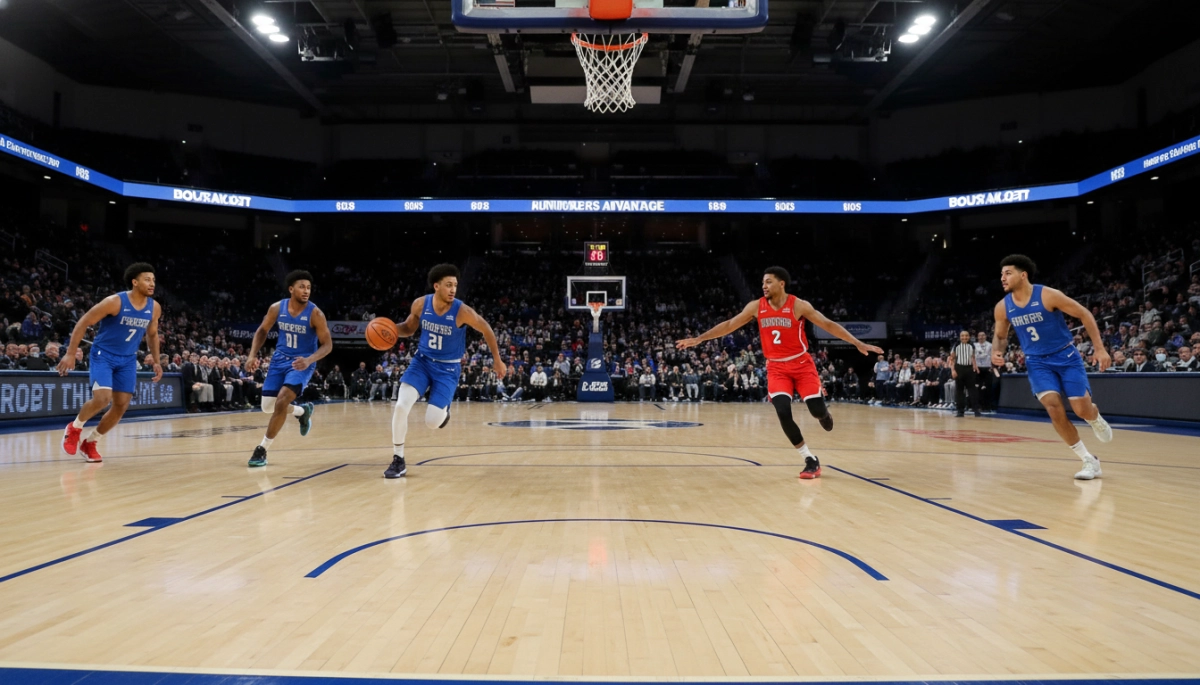
Spotting and Exploiting Numbers Advantages in Transition
When the ball changes possession, the first few seconds decide whether you have a fast-break opportunity. You need to quickly assess how many offensive players are ahead of how many defenders. Numbers advantages—2-on-1, 3-on-2, 4-on-3—are the backbone of efficient transition offense. If you learn to read them reliably, your team will generate more uncontested finishes and force defensive scrambling.
Immediate read: who is ahead and where
On the rebound or turnover, your initial objective is simple: push the ball to get advantage. If you are the ball-handler, look up before you cross halfcourt to see how many teammates are sprinting with you and where defenders are positioned. If you are a trailing player, sprint wide and occupy the highest-percentage lanes—middle for layups, wings for spacing and kick options. Your decisions should be fast: commit to penetrating lanes or pull back depending on the count.
- 2-on-1: Drive the middle or attack downhill; the trailer becomes a high-percentage pass/finish.
- 3-on-2: Use quick ball movement—drive and kick or flush the extra man to the rim.
- 4-on-3 or greater: Prioritize spacing to create open looks and force rotations.
Basic Spacing Rules to Convert Fast Breaks into High-Percentage Shots
Proper spacing turns a numbers advantage into points. In transition you have less time, so your spacing rules should be simple, repeatable, and instinctive. Teach your players a short menu of spacing rules they can execute without overthinking.
Three simple spacing principles to teach immediately
- Split the defenders: If you have a 3-on-2, two offensive players should occupy rim-side lanes while the third fills the weak-side outlet. This stretches the defense vertically and creates clear passing angles.
- Wings wide, trailer high: On a 2-on-1 or 3-on-2, wings should stop outside the paint to open driving lanes; the trailer positions at the free-throw line extended for a finish or pull-up.
- Don’t clog the lane: If you have more offensive numbers, avoid everyone crashing into the paint. Instead, place at least one shooter or rim-threat on the perimeter to punish over-committing help.
When to slow the break and set spacing for secondary transition
Not every advantage ends in an immediate layup. If the defense recovers—there are late rotating defenders or poor passing lanes—you should slow the break into a quick secondary transition or early offense. Use a simple check-in: if you don’t have a clear drive or pass within two dribbles, the ball-handler pulls up and uses spacing principles to initiate a controlled set. This preserves the advantage without forcing low-percentage plays.
These early principles—rapid numbers assessment and three core spacing rules—give you a repeatable start to every transition sequence. Next, you’ll examine specific player roles, reads on rotation, and practice progressions that teach these concepts under game pressure.
Player Roles and Responsibilities in Transition
Clear role definitions reduce hesitation and make fast breaks automatic. Assign simple, repeatable responsibilities so each player knows the most valuable action in any count.
- Primary ball-handler: Push the pace aggressively, eyes up, and attack the nearest advantage. Your default is to create—penetrate for a layup, draw a defender and dump to the trailer, or hit a lead pass to a sprinting wing. Limit yourself to two hard dribbles before committing to a read.
- Trailer (secondary attacker): Sprint the lane behind the ball-handler and read the nearest help defender. If the rim is open, anticipate a direct pass for a finish; if help rotates, pop to the elbow/FT-line-extended spot for a mid-range pull-up or kick. Never trail flat—maintain an angle that converts a drive into a high-percentage pass.
- Wings (rim-side/weak-side): On numbers breaks, stay wide enough to stretch the defense (roughly elbow to sideline spacing). If you’re the rim-side wing, be ready to cut hard to the hoop; weak-side wings must be prepared as kick-out shooters or secondary rim attackers depending on the count.
- Rim-runner/roller: On bigger advantages (4-on-3+), run the lane hard and occupy the paint when the defense shows scramble. Your job is to convert early touches or collapse the defense to create outside looks for teammates.
- Rebounder/first outlet: Secure the ball, make a quick, high-percentage outlet (chest or bounce to a sprinting guard), then chase the play to become the trailer or an outlet shooter.
Keep role assignments flexible—match player strengths to roles (e.g., put a confident finisher as the trailer). Reinforce one-sentence reminders: “Push, read, and fill.”
Reads on Defensive Rotation and Split-Second Decision Rules
Transition success is a sequence of immediate reads. Teach players to recognize a handful of rotation cues and run simple decision rules off each cue.
- Help committing early: If the nearest defender bites on the drive or vacates the paint to stop the ball, attack the rim hard and throw a lead pass to the trailer. Rule: if help steps, attack with speed; look for rim or trailer within one dribble.
- Late rotating defender: When a defender is sprinting back but off-balance, continue to attack the interior and force the rotation. If the rotation comes, kick to the open wing or trailer—don’t stop the momentum.
- Drop or zone-like coverage: If defenders drop to protect the rim (common vs bigger teams), pull up at the elbow or hit the trailer at the FT line for a short jumper. Rule: no forced baseline drives into drop defenders—kick to the perimeter.
- Balanced recovery: If the defense recovers quickly and you have no clear advantage within two dribbles, slow into secondary transition. Rule: two-dribble clock—if no advantage, reset.
Use counting and visual triggers: “heads ahead” (count offensive players ahead of the ball), “closest help” (identify who can arrive in two seconds), and “rim lane clear” (is there a direct path?). Instill these micro-checks until they become automatic under pressure.
Practice Progressions to Teach Numbers and Spacing Under Pressure
Progressive, constrained drills accelerate learning and build habits that survive fatigue and game stress.
- 2-on-1 continuous: Start with a rebound/outlet, run 2-on-1s from halfcourt. Limit dribbles to two for the ball-handler; score by finish or pass to the trailer. Rotate players rapidly to simulate game pace.
- 3-on-2 and 4-on-3 escalation: Add defenders gradually. Drill the read: who attacks, who fills, who spaces. Use stoppage coaching to point out missed spacing or late reads.
- Numbers plus spacing constraint: Award points for extra passes and for maintaining prescribed spacing (e.g., wings must be outside elbow). Penalize clustering in the paint to reinforce perimeter discipline.
- Live scrimmage starts: Begin possessions from a defensive rebound to practice outlet, sprint, and decision-making under live defensive pressure. Add shot-clock constraints to force quick reads.
Repeat these progressions frequently, keep verbal cues short, and increase defensive intensity as execution improves. The goal is to make the correct reads instinctive so numbers advantages and spacing convert into routine scoring opportunities during games.
Measuring Progress and Adjusting During the Season
Track a few simple metrics so adjustments are objective and manageable: conversion rate on transition opportunities (points per transition), turnovers surrendered on the break, and shot quality (layups/short pull-ups vs. contested threes). Combine stats with short film sessions that focus on 2–3 plays per game to highlight decision-making errors and successful reads.
- Set weekly practice goals tied to drills (e.g., 75% successful 2-on-1 finishes in constrained reps).
- Use quick, focused feedback—one correction at a time—so players internalize one habit before adding another.
- Adjust roles based on personnel: if you add a shooter, expand perimeter spacing; if you have a better finisher, prioritize trailer touches.
Putting Transition Offense into Game Action
Treat transition offense as a living part of your program: practice it deliberately, measure its outcomes, and make small in-game adjustments rather than large overhauls. Encourage players to play with controlled urgency—fast but intentional—and to communicate the two-word cues you’ve practiced. For fresh drill ideas and progressions you can incorporate immediately, see Fast-break drills and progressions.
Keep the approach simple, repeatable, and player-centered. Over time, these habits will let your team turn more possessions into high-percentage opportunities without forcing plays—exactly what wins close games and sustains offensive efficiency through a season.