
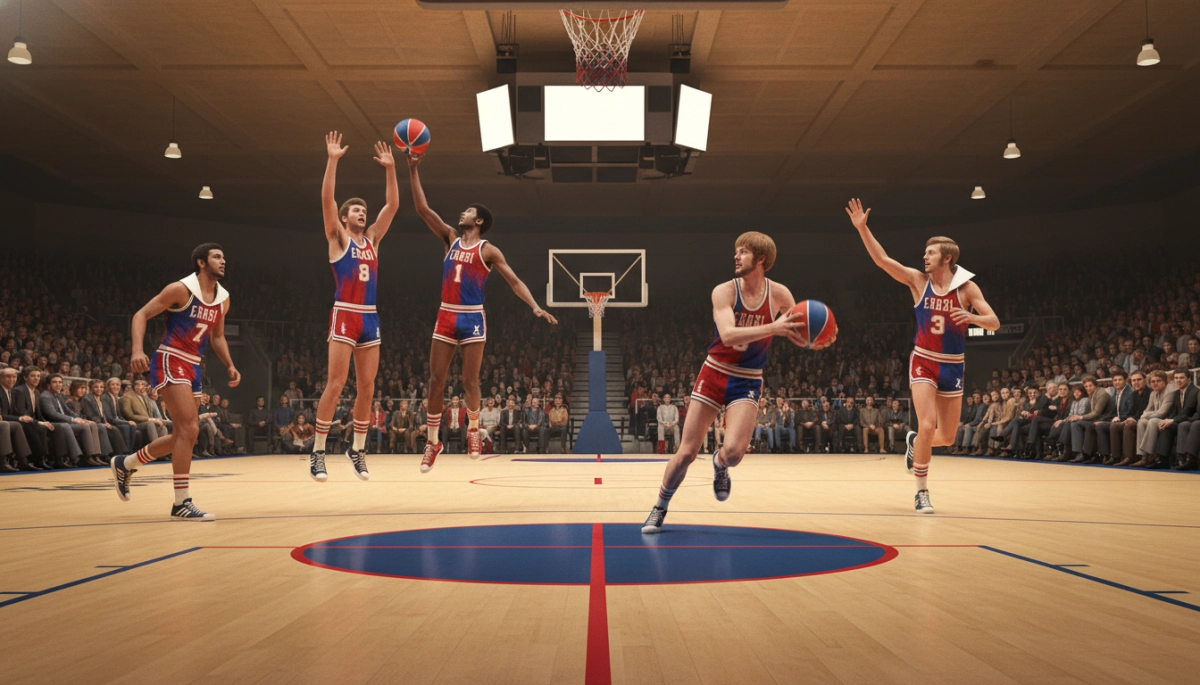
How ABA Pace Creates Consistent Scoring Opportunities
You’ll recognize ABA-style offenses by their emphasis on speed, spacing, and early-shot aggression. The goal is simple: increase high-quality attempts before a defense can set. By forcing quick decisions and maximizing transition advantages, you create more layups, open threes, and mismatches. For you as a coach or player, understanding the rhythm of possessions — when to push, when to reset, and which actions to prioritize — is the first step toward converting pace into points.
What makes a fast-paced ABA offense effective
- Early offense focus: Seek a good shot within the first 7–10 seconds of the shot clock. Early looks are often closer to the basket or open threes before help rotates.
- Transition aggression: Score or get to the rim on the break. Even contested shots in transition often yield higher expected value than late-clock forced shots.
- Space to operate: Use 4-out/1-in or 5-out spacing to open driving lanes and kick-out threes. Proper spacing forces defenders to cover more ground, creating split-second advantages.
- Force turnovers into points: Convert defensive stops or offensive rebounds into immediate scoring opportunities with quick outlets and fill lanes.
- Simplicity and repetition: A small set of practiced reads and actions ensures quick decisions under pressure — you can’t run a complex library at full speed.
Early-possession actions and the roles you must assign
To run pace effectively you need clear responsibilities. You’ll line up personnel and actions to exploit speed: who pushes the ball, who stays on the wings, and who crashes the glass. Assigning roles reduces hesitation and increases the likelihood of winning quick possessions.
Key roles and concrete actions on each possession
- Primary ball-handler (Push): Your first priority is to push the ball on a defensive rebound or opponent turnover. You’ll force defenders into retreat, create numerical advantages, and make quick reads to the rim or the trailer.
- Wings/Spacing players: Stay wide to provide width for penetration and to be ready for catch-and-shoot threes or secondary drives. You should be prepared to shoot early or attack closeouts.
- Rim-runner/roll man: Crash the rim on early offense for easy finishes and offensive rebounds. If the defense collapses, you’ll occupy paint defenders and open kick-outs.
- Floor general (decision maker): You’ll dictate when to pull the team into a half-court set. If the early look isn’t there, communicate the reset and call the appropriate secondary action.
Implementing this approach also requires measurable targets you can track: possessions per game (pace), points per possession (PPP), and turnover rate. In practice, prioritize conditioning, 3-on-2/2-on-1 drills, and repetitive early-offense sets so your team makes the fast choice the right choice.
Next, you’ll learn specific plays, spacing diagrams, and drills that translate these principles into repeatable on-court success.
Simple Early-Offense Plays That Yield High-Value Looks
When the defense is scrambling off a rebound or turnover, you want a short playbook of actions that create either a rim-attack, an open catch-and-shoot, or a quick kick to the trailer. Keep plays to 2–3 reads and put them on repeat until they’re automatic.
– Handoff/Drive into Space: Wing receives a quick handoff from the push, attacks downhill, and reads help. If the first defender steps, finish; if the help comes hard, kick to the opposite wing for a catch-and-shoot or to the trailer for a pull-up. Coaching points: the handoff should be a sell to force the defender to show; spacing must keep the trailer at least two steps behind the ball.
– Early Pick-and-Roll (POP or ROLL): Bring a screen from the rim-runner immediately after the push. If the big’s defender helps, the roller finishes or the screener pops to the three-point line for a wide-open look. Priority reads: drive lanes for the ball-handler, drop coverage recognition, and trailer angle. This action is deadly because it collapses untimed defenses.
– Split Action / Exchange: Push into the lane and immediately use a shallow cut from the wing. The cut draws attention and often frees up the opposite wing for a quick catch-and-shoot. Use this when the defense overcommits to the ball-handler; it’s a simple counter to aggressive closeouts.
– Quick Post-Seal & Kick: On a 4-out look, the post seals early and takes a one- or two-step finish. If doubled, the post kicks to oncoming perimeter shooters or a trailing guard. This leverages mismatches and punishes soft interior rotations.
– Rim-Crash Priority After Miss: On any early miss, designate one wing and the roll man to crash hard. Immediate outlets and second-chance attempts are a core PPP driver in fast systems.
Each play should include one sculpture-like read order: attack, finish, kick, reset. If none of the first three is available within 6–8 seconds, pull and run a set.
Practice Progressions and Drills to Make Fast Decisions Habit
Fast offenses rely on conditioned habit. Structure practices so repetitions mirror game-time tempo.
– 3-on-2 / 2-on-1 Progressive Drill (10–12 minutes): Start 3-on-2 from the defensive end with a coach-triggered outlet. Run until shot or turnover, then reverse. Focus: quick recognition of advantage, identifying the trailer, and finishing with contact. Progress by adding a defender to make it 4-on-3, forcing reads under more pressure.
– Shot-Clock Sprints (15 minutes): Simulate possessions with a 10-second shot-clock constraint. Coaches stop play after 10 seconds to correct reads, then replay. This trains urgency and teaches when to reset.
– Drive-and-Kick Live Reps (10 minutes): Wing receives 7–10 consecutive live reps where the coach forces a drive and requires a kick or finish. Rotate players so everyone practices both driving and catching under pressure.
– Transition-to-Half-Court Scrimmage (20 minutes): Start every scrimmage possession as a rebound or turnover; award extra points for initial-shot attempts inside the 7–10 second window. Use score incentives to reward early finishing and offensive rebounding.
Coaching cues to repeat: “Push and decide,” “Trailer or rim,” and “Two-step seal.” Track simple metrics each practice — early-shot percentage, offensive rebound rate, and turnovers on push — and set weekly targets. Film short clips of early possessions and review them with players; a 60–90 second visual feedback loop speeds learning far more than verbal correction alone.
In-Game Adjustments and Rotations
Once a game starts, your ability to sustain pace depends on small, timely adjustments. Monitor opponent tendencies and your team’s energy, then alter personnel and actions to protect your strengths.
When to speed up or slow down
- Speed up: opponent fatigue, late shot-clock turnovers, or when you have a clear numerical advantage in transition.
- Slow down: when your spacing is broken, key shooters are cold, or the opponent is switching effectively on screens.
Substitution patterns and role preservation
- Stagger minutes so you always have at least two players who can push the ball immediately after a defensive stop.
- Use short, high-energy stints for primary pushers and rim-runners — freshness is critical for finishing contact and forcing decisions.
- Keep a reliable shooter on the floor when pressing pace to convert kick-outs and punish scrambling rotations.
Timeouts, fouls, and situational resets
- Use timeouts to reset momentum or slow the opposing team’s fast-break rhythm — but don’t overuse them and kill your own pace identity.
- Manage fouls to avoid losing your primary rim-finisher or ball-pusher during critical high-tempo stretches.
- If an early look doesn’t develop, commit to a single, practiced secondary action to avoid panicked decisions late in the shot clock.
Putting Pace Into Play
Building an ABA-style fast offense is less about gimmicks and more about culture: prioritizing quick decisions, conditioning, and clearly defined roles. Start small — introduce one early-offense action and one drill each practice — then measure and iterate. Encourage player ownership of reads and use objective metrics to guide adjustments. For reliable pace and possession data to inform your tweaks, consult resources like Basketball-Reference.
Commit to consistency, be patient with the learning curve, and let the system evolve with your personnel. When executed with discipline and clarity, an ABA-inspired fast pace becomes a sustainable advantage rather than a shotgun approach — and that’s where real, repeatable scoring success lives.