

Why live in-game betting offers opportunities you can exploit
When you bet live during a basketball game, you’re trading on information that sportsbooks didn’t have—or didn’t weight correctly—when they posted pre-game odds. The market reacts slowly to events like sudden foul trouble, unexpected rotations, or an early hot shooting stretch. If you can interpret those events faster and more accurately than the market, you create profitable edges.
Live betting rewards quick, disciplined thinking rather than guesswork. You’re not trying to predict the entire game from scratch; you’re reacting to evolving conditions. That changes the skills you need: observational awareness, basic probability intuition, and a plan for staking and hedging. You also benefit from a smaller time horizon—bets settled on the next few possessions or quarters are less exposed to long-tail variance than full-game wagers.
Practical benefits you should expect from in-game betting
- Higher-frequency opportunities: more lines update throughout the game, giving multiple chances to find value.
- Shorter outcome windows: you can limit variance by targeting short-term markets (next possession, next quarter).
- Reactive advantage: you can respond to concrete events (injuries, rotations) rather than pre-game narratives.
- Hedging flexibility: you can place offsetting bets later in the game to lock profit or reduce loss.
What to watch in the early minutes to read basketball odds correctly
The first 5–12 minutes of a game are crucial for live bettors. That window often reveals the pace, defensive intensity, personnel that matters, and whether key players are in early foul trouble. If you know which signals matter and which are noise, you can position yourself before sportsbooks fully adjust the numbers.
Key indicators and how to use them
- Pace and possession value: Count possessions mentally or estimate pace. If the game is faster than expected, totals lines and player usage props will move; faster pace favors high-volume scorers and higher totals.
- Rotation surprises: Note who the coach trusts early. A bench player getting extended minutes can change matchup dynamics and player-prop value.
- Foul trouble and substitutions: Early fouls to a star or opposing defenders create opportunities for spread or player-targeted bets when lines lag.
- Shooting variance: A 3-point heater or cold stretch will regress. Expect regression and consider fade opportunities when conversion rates are unsustainably high or low.
- Timeout use and coaching response: How coaches react to runs—calling timeouts or changing defense—often signals forthcoming momentum shifts.
Build a short checklist you can run through in real time: pace, rotations, fouls, and shooter efficiency. Use this checklist to decide which live markets to target (next possession, quarter spread, player props) and how aggressively to size your stake. In the next section you’ll learn specific bet types and staking plans that convert these observations into measurable edges in live markets.
Which live markets to target and when
Not every live market is equally exploitable. Your early-game checklist should point you toward a handful of markets that consistently offer both liquidity and mispricings. Choose markets based on the signal you’ve observed and the time horizon you want to trade.
- Next possession / next basket: Highest turnover and quickest resolution. Use when you spot immediate mismatches (e.g., switch to a poor perimeter defender, an inbound set targeting a specific player) or when a team is intentionally pushing pace. Stake small—these are high-frequency, lower-edge plays.
- Quarter spreads and totals: Good for reading momentum and pace updates. If the first quarter shows a faster-than-expected pace or one team is locking down defensively, quarter lines will lag initial adjustments and can be taken advantage of with larger, but still measured, stakes.
- Live moneyline: Best for capitalizing on swings—injuries, ejections, or an unexpectedly dominant bench unit. Use when you have high confidence about sustained advantage over several possessions.
- Player props (in-play): Excellent when usage changes are clear. If a star gets into early foul trouble and the backup will see increased usage, or a shooter is heating/cooling, player-minute, point, rebound, and three-point props often move slowly relative to on-court reality.
- Alternate lines and same-game parlays: Useful for tailored exposure (e.g., a player to score in a limited window). Be cautious: correlated outcomes increase variance and can be harder to hedge.
Prioritize markets where the outcome window matches your observation horizon. If you can reliably forecast three-to-five possessions better than the market, focus on next-possession or short-quarter markets; if you’re predicting sustained momentum for several minutes, look at quarter or moneyline markets.
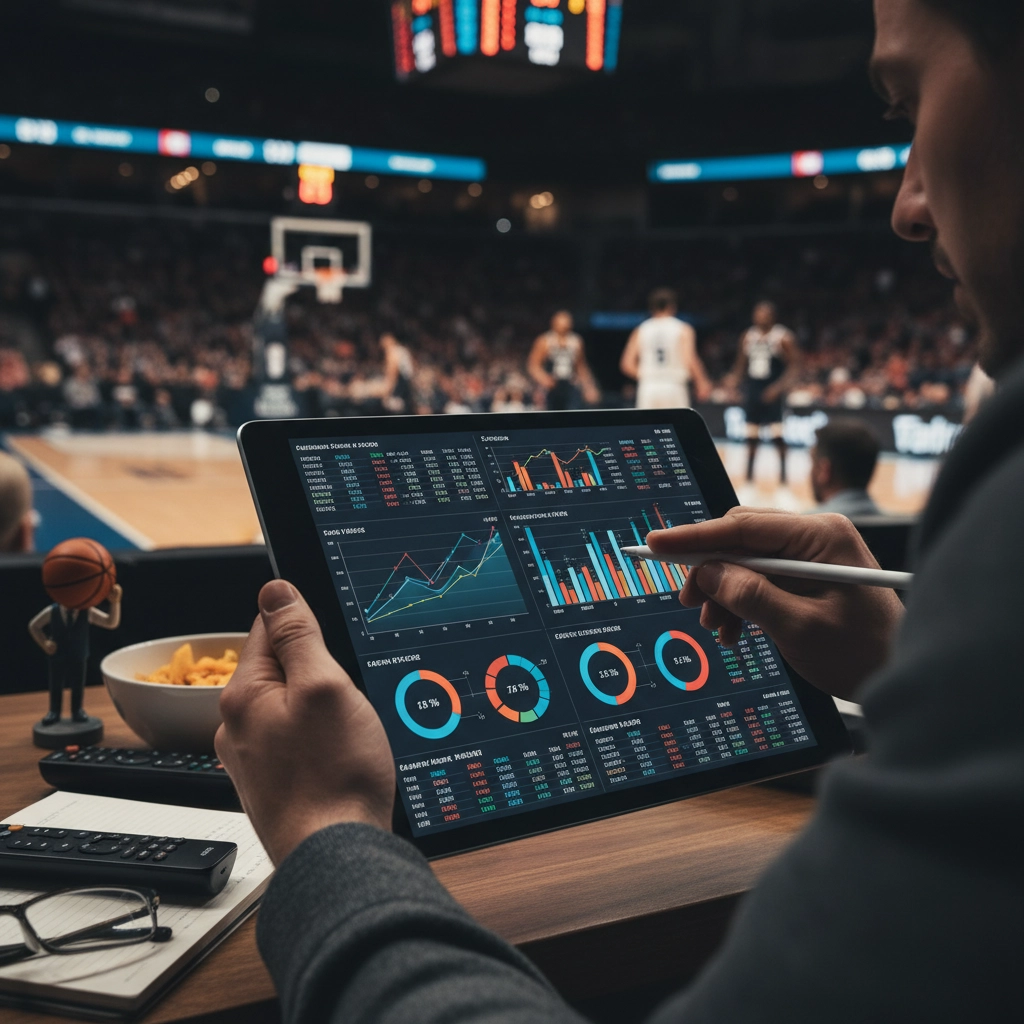
Staking strategies and bankroll management for live play
Live betting demands stricter bankroll rules than pre-game action because of the higher frequency and emotional pace. Convert your edge into a long-term profit by controlling variance and avoiding ruin.
- Lower unit sizes: Use smaller units for live bets—typically 0.25%–1% of bankroll per short-horizon wager, and up to 1.5%–2% for longer, high-conviction live plays. This keeps variance manageable despite more bets.
- Kelly with a haircut: If you estimate edge, apply a fractional Kelly (25%–50% of full Kelly). That balances growth and drawdown control. If you don’t estimate edge precisely, stick to fixed-percentage staking.
- Differentiate by market: Size bets by expected edge and time horizon—tiny stakes on next-possession wagers, medium stakes on quarter lines, larger on moneylines when the edge is clear.
- Stop-losses and session limits: Define a daily loss cap (e.g., 3%–5% of bankroll) and a maximum number of live bets per game. Walk away when you hit either limit to prevent emotional chasing.
- Record-keeping: Track market, stake, odds, result, and the in-game signal that prompted the wager. Over time this log is your best tool to refine sizing and market selection.
Execution: timing, line movement, and smart hedging
Knowing which bet to place isn’t enough—you must execute quickly and smartly. Live markets move fast, and timing plus hedging separate disciplined winners from impulsive losers.
- Watch line velocity: If a line moves sharply against you immediately after a play, consider whether the market is correcting a misprice or just overreacting. Quick, small stakes capture overreactions; large swings demand caution.
- Scale in and out: Instead of one large bet, ladder positions across a small range of odds to improve average price and reduce timing risk. Scale out of positions as edges dissipate.
- Hedge selectively: Use hedging to lock profit or cut losses—buying the opposite market late in a game is often cleaner than cash-out options with built-in juice. Calculate expected value before hedging; small guaranteed profit can be better than probabilistic upside.
- Use multiple books and feeds: Having accounts across books lets you shop prices and exploit latency. Also compare official game feeds—stream delays can create risky lags that sportsbooks already factor into odds.
- Stay unemotional: Discipline wins. If you miss an edge because you hesitated, accept it—chasing with larger stakes rarely restores long-term profitability.
With these market choices, staking rules, and execution habits, you translate those early-game observations into consistently applied strategies that can produce an edge in live basketball betting. Part 3 will cover advanced analytical tools and process checkpoints to further sharpen your in-game approach.

Putting the plan into action
Live in-game betting is a skill you develop through disciplined routine rather than one-off insight. Establish and follow pre-game preparation, a short in-game checklist, and strict staking and session limits. Treat each live session as a controlled experiment: place small, deliberate wagers, record why you acted, and review the results to refine timing and market choice.
Be patient with variance, prioritize process over short-term results, and use reliable data feeds to reduce latency and guesswork—official play-by-play sources such as NBA Stats are a good place to start. As you build experience, expand into longer-horizon live markets and incorporate analytic tools, but keep risk controls and record-keeping central to everything you do.
Frequently Asked Questions
How much of my bankroll should I use for live bets?
Use smaller units for live play: typical short-horizon bets 0.25%–1% of bankroll, and up to 1.5%–2% for high-conviction longer live wagers. If you estimate edge, apply a fractional Kelly (25%–50% of full Kelly). Always define session loss caps (e.g., 3%–5% of bankroll) to avoid emotional chasing.
Which live markets are best for beginners?
Beginners should start with short, low-variance markets: next-possession or next-basket wagers with tiny stakes, and quarter spreads/totals once you can read pace and momentum. Avoid large same-game parlays and heavily correlated alternatives until you understand hedging and variance.
How do I avoid emotional betting during live play?
Set concrete rules before you start: maximum number of live bets per game, session loss and profit limits, fixed unit sizes, and a mandatory break when limits are hit. Keep a concise log of the signal that triggered each bet—this accountability deters impulsive decisions and speeds learning.